
Indian Institute of Photography Begins Training 200 Island Youth in Andaman & Nicobar Under World Bank-Backed RAMP Scheme

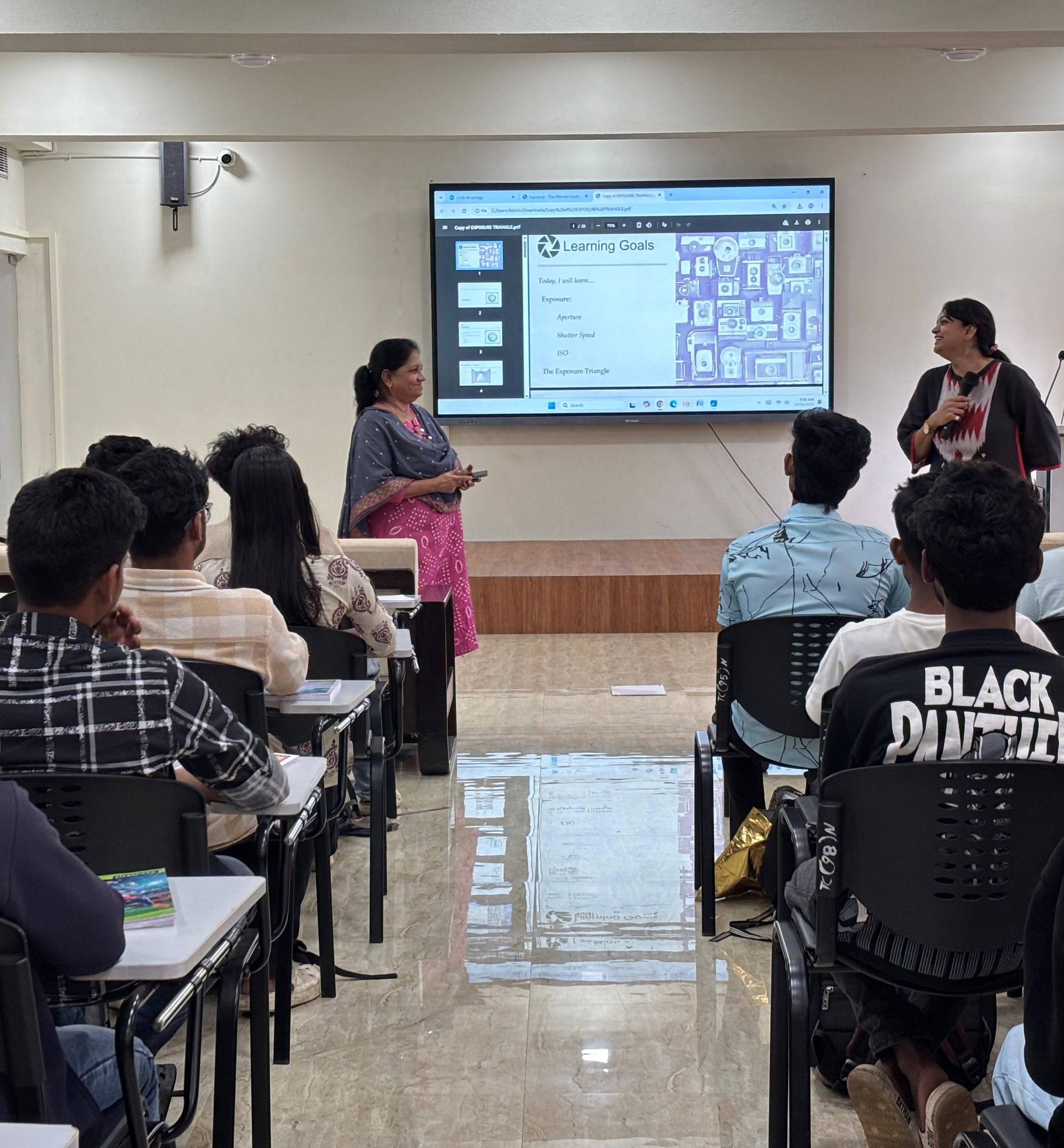
Training is now underway in the Andaman and Nicobar Islands, where the Indian Institute of Photography is skilling and certifying 200 young people in photography, videography, drone imaging, underwater photography and astro photography. Commissioned under RAMP Scheme ANI-12, the programme began at Sri Vijaya Puram on 26 October 2026 and runs across three island locations until 19 November 2026.
A Government Mandate Won on Academic Merit
The Directorate of Information, Publicity and Tourism of the Andaman and Nicobar Administration invited proposals from institutions able to deliver specialised capacity building in visual media for unemployed youth and tourism service providers across the archipelago.
The Indian Institute of Photography submitted a detailed academic proposal covering segment-wise curriculum, faculty deployment, assessment design and certification. After a review that included clarifications on institutional affiliation and documentation of prior government engagements, the Competent Authority approved an eight-day training and certification programme for 200 candidates.
The mandate was confirmed through Order No. 1157 dated 15 October 2026, issued by the Directorate of Information, Publicity and Tourism, with finance concurrence obtained vide IFD No. 396/10/2026.
Five Authorities Behind One Programme
This is not a single-department initiative. The programme draws on a chain of institutional support that runs from a multilateral lender to a local directorate:
- The World Bank Group - co-funder of the RAMP programme, contributing ₹3,750 crore (USD 500 million) of its total outlay
- Ministry of Micro, Small and Medium Enterprises, Government of India - the implementing ministry and budget holder for RAMP
- Directorate of Information, Publicity and Tourism, A&N Administration - the commissioning authority and nodal directorate
- Directorate of Tourism, A&N Administration - originator of the capacity building requirement for the tourism sector
- Directorate of Industries, A&N Administration - the RAMP implementation channel at Union Territory level
The Finance Department of the Administration provided expenditure concurrence, with the Secretary (IP&T) holding oversight.
What RAMP Is
Raising and Accelerating MSME Performance (RAMP) is a World Bank-assisted Central Sector Scheme of the Ministry of MSME, launched by the Prime Minister on 30 June 2022. According to the Ministry's RAMP portal, the scheme carries a total outlay of ₹6,062.45 crore (USD 808 million) across five years, targeting 555,000 MSMEs nationwide.
RAMP funds reach states and union territories through Strategic Investment Plans prepared by each administration for its own MSME sector. This programme sits within that framework as Scheme ANI-12.
Why the Islands Need Trained Photographers
The case for this programme rests on a simple mismatch: tourism demand in the Islands has grown faster than the local supply of people who can photograph it.
Ministry of Tourism figures show domestic arrivals rose from 323,619 in 2023 to 710,397 in 2024, roughly 120 per cent in a single year, reaching 802,017 in 2025. Foreign arrivals grew 27 per cent to 11,497 in 2024.
The Islands account for more than 25 per cent of India's coastline, and CNN Travel placed the archipelago second on its list of 25 destinations to visit in 2025. Scheduled international flights now reach Sri Vijaya Puram, and the Administration has approved four five-star resorts alongside a yacht marina.
Every resort, homestay, dive operator and tour agency in that market needs photographs and video, and most of it has been commissioned from practitioners flown in from the mainland.
Where the Business Actually Sits
A trained local photographer can earn from demand that already exists:
- Room, interior and food photography for resorts and homestays on travel booking platforms
- Adventure and water-sports coverage for scuba, snorkelling, sea-walking and kayaking operators
- Destination films and short-form social content for tour operators and the Administration
- Wedding, event and destination shoots in a growing honeymoon market
- Travel media, stock photography and independent content creation
Every rupee earned this way stays in the Islands rather than leaving with a visiting crew.
What the 200 Students Will Learn
The curriculum is built backwards from employment. Each group receives eight days, sixteen sessions and 48 contact hours, structured so every concept is demonstrated, practised in the field, reviewed against the student's own images, corrected and shot again.
- Camera handling and photographic craft - manual exposure, focus, metering, white balance, composition, and equipment protection in humid, saline and monsoon conditions
- Destination and tourism photography - seascape and coastline work, high-contrast tropical light, heritage and architectural photography including the Cellular Jail, and hospitality photography to online travel platform standards
- Underwater and scuba photography - housings and seals, colour loss with depth, lighting at depth, marine subjects, and reef-safe shooting practice
- Astro and night photography - exposure for stars, focusing at infinity, star trails, light painting and stacking in post-production
- Videography and visual storytelling - shot grammar, gimbal movement, location audio, and building a 60 to 90 second destination film
- Drone photography and aerial videography - the Drone Rules 2021, Digital Sky registration, airspace discipline, coastal flying and aerial composition
- Post-production and digital workflow - RAW processing, colour treatment, video editing, and delivery formats for print, web and booking platforms
- Professional practice and livelihood - pricing, quotations, client handling, copyright, invoicing and graded equipment investment
Groups are capped at 20 participants per mentor. Every student is assessed on submitted work rather than a written paper: a portfolio of finished photographs, a short destination film, an edited aerial sequence and an individual review.
All 200 participants receive a joint certification issued by the Indian Institute of Photography together with the organising government body, the Directorate of Information, Publicity and Tourism of the Andaman and Nicobar Administration. A certificate carrying both names gives an island photographer credentials a client, resort or tour operator can verify. The Directorate also receives an individual assessment record for every participant.
Three Islands, Three Locations
The programme reaches candidates across the archipelago rather than concentrating in the capital alone.
| Location | Beneficiaries | Dates |
| Sri Vijaya Puram | 80 | 26 October to 2 November 2026 (underway) |
| Swaraj Dweep | 40 | 3 November to 11 November 2026 |
| Shaheed Dweep | 80 | 12 November to 19 November 2026 |
The first batch is in session at Sri Vijaya Puram as this is published. The Directorate received 209 applications against 200 places. Candidates at Sri Vijaya Puram travel in from Little Andaman, Rangat, Mayabunder, Diglipur, Long Island and Campbell Bay, making this one of the widest-reaching creative skill interventions the Islands have hosted.
The Mentors
Two senior mentors from the Indian Institute of Photography are deployed to the Islands for the full duration of the engagement, one dedicated to each group of twenty.
Garima Chaudhary and Asif Khan, both mentors at the Indian Institute of Photography, have been appointed to deliver the programme. Each carries a group of twenty through the full eight days, bringing professional practice and classroom teaching experience at the institute to the field conditions of the archipelago.
Academic supervision of curriculum and assessment rests with Rajesh Goyal, Founder and Chairman of IIP Foundation and Director of the Indian Institute of Photography (IIP), who brings more than thirty years in photography, advertising and cultural documentation, including creative leadership across more than 500 advertising campaigns.
From the Founder
When we started in 2010, structured photography education barely existed in India. Taking it to the Andaman and Nicobar Islands, to young people who live surrounded by some of the most photographed landscape in the country but have never been taught to photograph it professionally, is exactly what this institution was built for. Our mission was never to train photographers in metros alone. It was to make creative education reachable, and to turn creative ability into a livelihood. Two hundred certified practitioners across these islands is what that mission looks like in practice. - Rajesh Goyal, Founder & Chairman, IIP Foundation; Director, Indian Institute of Photography
Placements and the National Skilling Mission
The Indian Institute of Photography has trained more than 33,000 students from over 40 countries across sixteen years of operation, and maintains a 100 per cent placement record.
In 2025-26 alone, 24 students were placed across advertising agencies, production houses, government ministries and brands at an average of ₹40,000 per month, while eight established independent freelance practices.
That record is what makes this a skilling intervention rather than a workshop. RAMP is measured on enterprise outcomes, and a certified photographer who registers as a tourism service provider becomes exactly that: a micro-enterprise in the formal economy.
MSMEs contribute over 31 per cent of India's GDP and 48.58 per cent of exports, supporting livelihoods for nearly 32.8 crore people, according to the Ministry of MSME. More than 7.9 crore enterprises had been formalised through the Udyam and Udyam Assist platforms as of March 2026.
Building India's Creative Economy
At the inaugural World Audio Visual and Entertainment Summit in Mumbai in May 2025, the Prime Minister described the dawn of India's orange economy, built on content, creativity and culture, and called on creators to Create in India, Create for the World.
The creative economy employs an estimated 8 per cent of India's workforce. Programmes like this extend it past the metros into places where creative talent exists but formal training has not reached.
Two hundred certified practitioners in these islands means the destination's story gets told by people who live there.
With Gratitude to the Andaman & Nicobar Administration
This programme exists because the Administration identified photography as a serious livelihood route for island youth and committed public funds to it.
The Indian Institute of Photography records its appreciation to the Directorate of Information, Publicity and Tourism, the Directorate of Tourism, the Directorate of Industries and the Finance Department for the planning, sanction and execution behind this initiative, and for making professional creative education reachable to young people in one of the most remote parts of India.
