
In an AI World, Human Creativity Remains the Soul of Photography

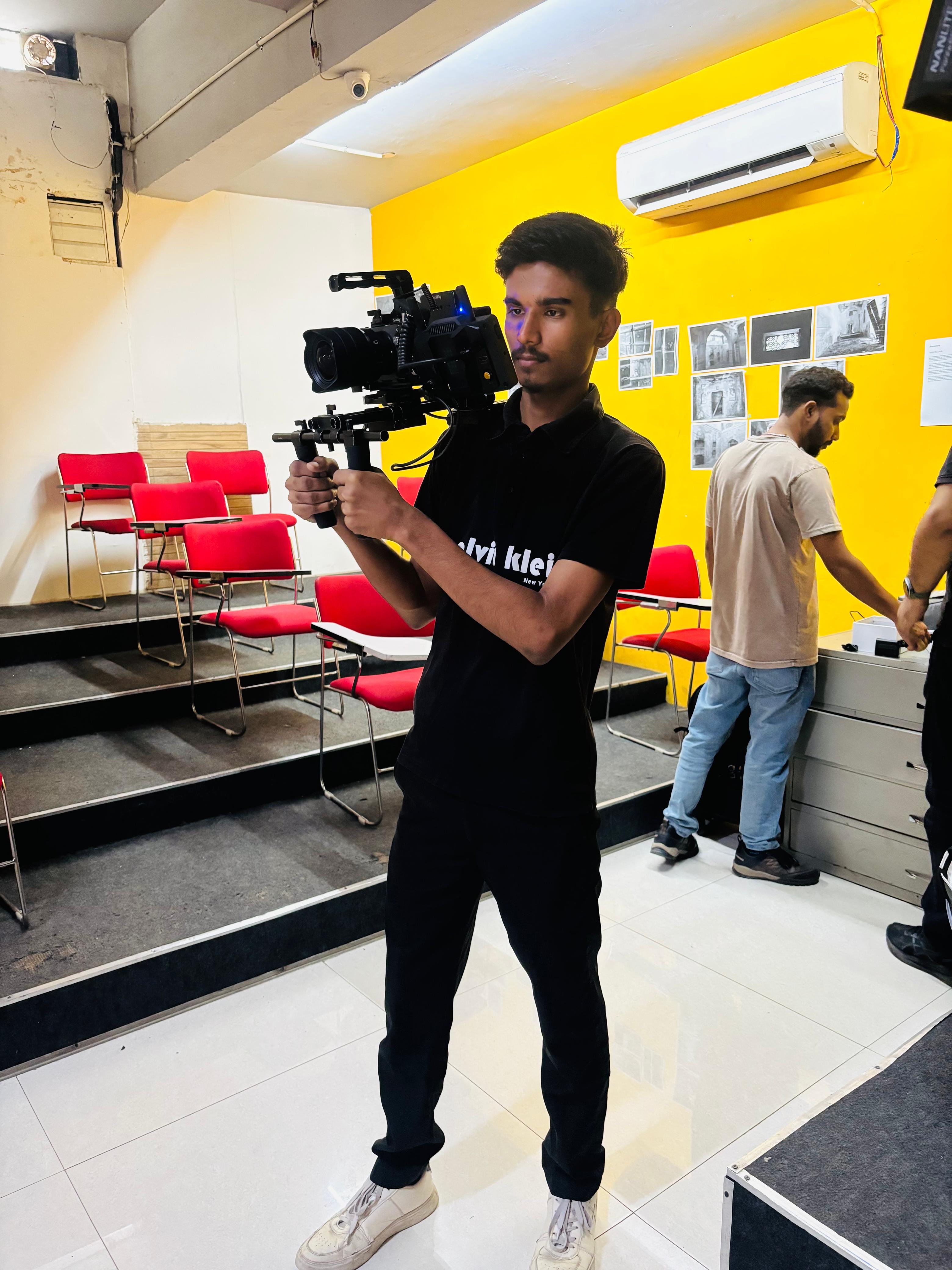
Artificial intelligence is rapidly changing how photographs are captured, edited, organised and presented. Cameras can now recognise faces, track moving subjects, correct exposure and reduce noise with remarkable precision. Editing software can remove distractions, replace backgrounds, adjust lighting and generate visual elements within seconds.
These developments have made photography faster and more accessible. They have also raised an important question: if technology can perform so many creative and technical tasks, what role will the photographer play in the future?
The answer lies in understanding the difference between producing an image and creating a photograph with meaning.
Artificial intelligence can analyse pixels, recognise patterns and imitate visual styles. However, it cannot independently experience a moment, understand its emotional importance or decide why a particular story deserves to be told. Technology can assist the photographer, but the photographer still provides the perspective, sensitivity and intention that transform an image into a meaningful visual experience.
In an increasingly automated world, human creativity remains the soul of photography.
The Growing Role of AI in Photography
The influence of AI in photography is already visible across cameras, smartphones, editing platforms and digital workflows. Many processes that once required extensive technical effort can now be completed almost instantly.
AI-supported tools can assist photographers with:
- Subject and eye detection
- Automatic focus tracking
- Image stabilisation
- Noise reduction
- Exposure correction
- Background removal
- Object selection
- Colour correction
- Image sorting and categorisation
- Automated retouching
- Generative image expansion
- Restoration of old or damaged photographs
For professional photographers, these tools can significantly reduce repetitive work. A wedding photographer can sort thousands of photographs more efficiently. A commercial photographer can remove minor background distractions without rebuilding an entire set. A wildlife photographer can use intelligent autofocus to follow a fast-moving subject more accurately.
These capabilities do not necessarily reduce the importance of photographers. Instead, they allow photographers to spend less time on mechanical processes and more time on creative decision-making.
The real value of AI depends on how thoughtfully it is used. In the hands of a skilled photographer, AI becomes a powerful assistant. Without creative direction, it remains only a tool capable of producing technically polished but emotionally empty visuals.
Photography Is More Than Technical Perfection
A photograph can be sharp, correctly exposed and visually balanced, yet still fail to connect with the viewer.
Technical perfection alone does not create emotional impact. Some of the most memorable photographs in history are not remembered because of flawless lighting or advanced equipment. They are remembered because they captured truth, conflict, beauty, vulnerability, courage or a decisive moment in human life.
Photography involves observation. It requires the ability to recognise expressions, gestures, relationships and details that other people may overlook. A photographer does not merely record what is visible. A photographer interprets what is happening.
Two photographers standing in the same location with identical cameras can create completely different images. Their choice of subject, angle, distance, timing, composition and light will reflect their individual understanding of the situation.
Artificial intelligence may recommend a technically suitable frame, but it cannot fully understand why a child holding a parent's hand, a worker pausing after a long day or an empty chair in a crowded room may become the emotional centre of a photograph.
Creativity Begins Before the Camera Is Used
Photography is often misunderstood as the act of pressing a shutter. In reality, the creative process begins much earlier.
A professional photographer must understand the purpose of the assignment, the intended audience, the subject, the location, the visual language and the final platform on which the image will appear.
In advertising photography, the photographer must understand the brand and the consumer. In fashion photography, the photographer interprets clothing, personality and cultural context. In documentary photography, the photographer must build trust and represent people responsibly. In architectural photography, the photographer studies space, structure, material, proportion and light.
The camera records the final decision, but creativity guides every decision leading up to it.
This is why enrolling in a professional photography course remains relevant even when cameras and software are becoming more intelligent. Professional education is not limited to learning camera settings. It teaches students how to think visually, develop concepts, work with people, solve production challenges and communicate through images.
A photographer must know not only how to create an image, but also why the image should be created in a particular way.
AI Can Generate Images, but Not Lived Experience
Generative AI can create highly detailed visuals based on written instructions. It can simulate landscapes, people, products, architecture and imaginary worlds. For concept development and visual experimentation, this technology offers exciting possibilities.
However, an AI-generated image does not come from a lived moment. It is constructed from patterns learned from existing data.
A documentary photograph of a real community has social, cultural and historical context. A portrait carries the presence and personality of a real individual. A wildlife photograph represents patience, observation and an encounter with nature. A photograph of a public event becomes evidence of a particular place and time.
These qualities cannot be replaced simply by generating a visually similar image.
Photography has always held a relationship with reality. Even when photographs are staged, stylised or heavily edited, they usually begin with an interaction between a photographer, a subject and a physical environment.
Human photographers bring personal memory, cultural awareness, intuition and empathy to this interaction. They understand when to direct a subject and when to remain silent. They can sense discomfort, recognise authenticity and respond when an unexpected moment becomes more powerful than the original plan.
AI can reproduce visual characteristics. It cannot independently build human relationships or experience the emotional consequences of the images it creates.
The Photographer's Role Is Evolving
The rise of artificial intelligence does not mean that photography is disappearing. It means that the role of the photographer is expanding.
Tomorrow's photographers will need to combine traditional photographic knowledge with an understanding of emerging technologies. They will need to know when automation improves efficiency, when manual control is necessary and when digital manipulation may damage the authenticity of an image.
They may work as photographers, visual directors, content creators, digital artists, image researchers, cinematographers, editors or creative strategists. Some professionals will combine photography with AI-generated environments. Others will build careers around documentary authenticity, where trust and factual representation are essential.
A successful photography career in India will increasingly depend on adaptability. The Indian market includes advertising, fashion, weddings, e-commerce, cinema, media, architecture, tourism, food, wildlife, sports and digital content. Each sector requires a different combination of technical ability, visual understanding and professional discipline.
AI may change workflows within these sectors, but clients will continue to require people who can understand briefs, manage productions, direct subjects, collaborate with teams and deliver visual communication that serves a clear purpose.
The photographer who understands both creativity and technology will remain valuable.
Why Formal Photography Education Still Matters
Access to cameras and editing software has increased dramatically. Anyone can watch tutorials, experiment with settings and upload images online. While self-learning is valuable, professional photography demands more than isolated technical knowledge.
A credible photography institute creates an environment where students learn through structured practice, assignments, critiques, professional guidance and industry exposure. Students are encouraged to examine not only whether an image looks attractive, but also whether it communicates effectively.
A comprehensive photography course in India should help students develop knowledge across several areas:
- Camera controls and photographic techniques
- Lighting for indoor and outdoor situations
- Composition and visual design
- Portrait, product, fashion and documentary photography
- Digital editing and colour management
- Visual storytelling and research
- Production planning and client communication
- Ethics, copyright and responsible image-making
- Portfolio development
- Business and professional practices
- Emerging applications of artificial intelligence
Education also helps students develop a personal visual language. This is especially important in an age when algorithms can quickly imitate popular styles.
When thousands of images begin to look similar, originality becomes more valuable. A photographer must learn how to move beyond filters, trends and visual imitation to create work that reflects an individual point of view.
Human Judgment Will Become More Important
As AI-generated and AI-edited images become more common, questions of authenticity will become increasingly important.
Was the image captured or generated? Was the scene substantially altered? Does the photograph accurately represent the event? Has the subject given
consent? Could the image mislead viewers?These are not only technical questions. They involve ethics, responsibility and human judgment.
Photojournalists, documentary photographers, brands, institutions and content platforms will need clear standards for disclosing manipulated or generated imagery. Photographers must understand where enhancement ends and misrepresentation begins.
A machine can execute an instruction, but it cannot take moral responsibility for the outcome. The photographer, editor, agency or publisher must make that decision.
Professional credibility will therefore depend on transparency as much as technical skill. Photographers who maintain ethical standards and protect the trust of their audiences will continue to distinguish themselves in an environment filled with synthetic content.
Creativity Is Not the Rejection of Technology
Protecting human creativity does not require photographers to reject AI.
Photography itself has always evolved through technology. The transition from film to digital photography changed the industry. Autofocus, digital sensors, advanced lighting systems, mobile cameras and editing software were initially viewed with uncertainty. Over time, they became part of professional practice.
AI represents another major stage in this evolution.
The challenge is not whether photographers should use AI. The challenge is whether they will use it consciously.
AI should support the photographer's vision rather than determine it. It can speed up selection, improve image quality, assist with planning and simplify editing. But decisions involving emotion, storytelling, authenticity and cultural meaning must remain human-led.
A photographer should be able to explain the idea behind an image, the choices made during its creation and the response it seeks from the audience. Without this intention, even the most advanced visual may remain superficial.
The Future Belongs to Creative Thinkers
The future of photography will not be defined by a competition between humans and machines. It will be shaped by people who know how to use machines without losing their individuality.
Photographers who depend only on routine technical processes may find certain parts of their work automated. Photographers who bring imagination, emotional intelligence, leadership, research and storytelling to their practice will continue to create value.
This makes creative education more important, not less.
A strong professional photography course must prepare students to work with evolving technology while strengthening the abilities that technology cannot replace. Students must learn to observe closely, ask better questions, understand people and develop ideas that are rooted in real experiences.
The camera may become smarter. Editing may become faster. Artificial intelligence may generate countless visual possibilities. Yet the decision about which story should be told, whose perspective should be represented and what a photograph should make the viewer feel will remain deeply human.
Conclusion
Artificial intelligence is transforming photography, but it is not eliminating the need for photographers. It is removing certain limitations, accelerating workflows and creating new forms of visual expression.
The photographers who succeed will be those who treat AI as a creative resource rather than a substitute for thought.
Technique can be automated. Styles can be imitated. Images can be generated. But curiosity, empathy, cultural understanding, personal experience and emotional sensitivity cannot be reduced to software functions.
These qualities give photography its purpose.
In an AI-driven world, the photographer's greatest strength will not be the ability to compete with technology. It will be the ability to bring something technology does not possess: a human point of view.
Because while artificial intelligence may help construct the image, human creativity will continue to give photography its soul.
