
Life Inside a Creative Arts Institute: Photography to Fine Art at IIP Academy

Creative Arts Education in India: A Reality Check
Creative arts education in India has long lived in contradiction. On one hand, India is a civilisation built on visual culture, temple sculpture, miniature painting, folk crafts, architecture, cinema, photography. On the other hand, formal education systems have treated art as an extracurricular indulgence rather than a serious academic and professional pathway.
That mindset is changing. Rapidly.
The creative economy today sits at the intersection of culture, technology, media, communication, heritage, and commerce. Photography, fine art, filmmaking, design, and visual research are no longer peripheral skills; they are central to branding, governance, documentation, storytelling, and nation-building. What India has needed-and still needs-are institutions that treat creative education with the same rigour as engineering, law, or management.
This is where institutes like IIP Academy decisively stand apart.
Beyond Classrooms: What Life Inside Really Means
Life inside a serious photography and fine art institute is not about attending classes and submitting assignments. It is immersive, demanding, and transformative. At IIP Academy, the student experience is deliberately designed to mirror the life of a practicing artist or visual professional.
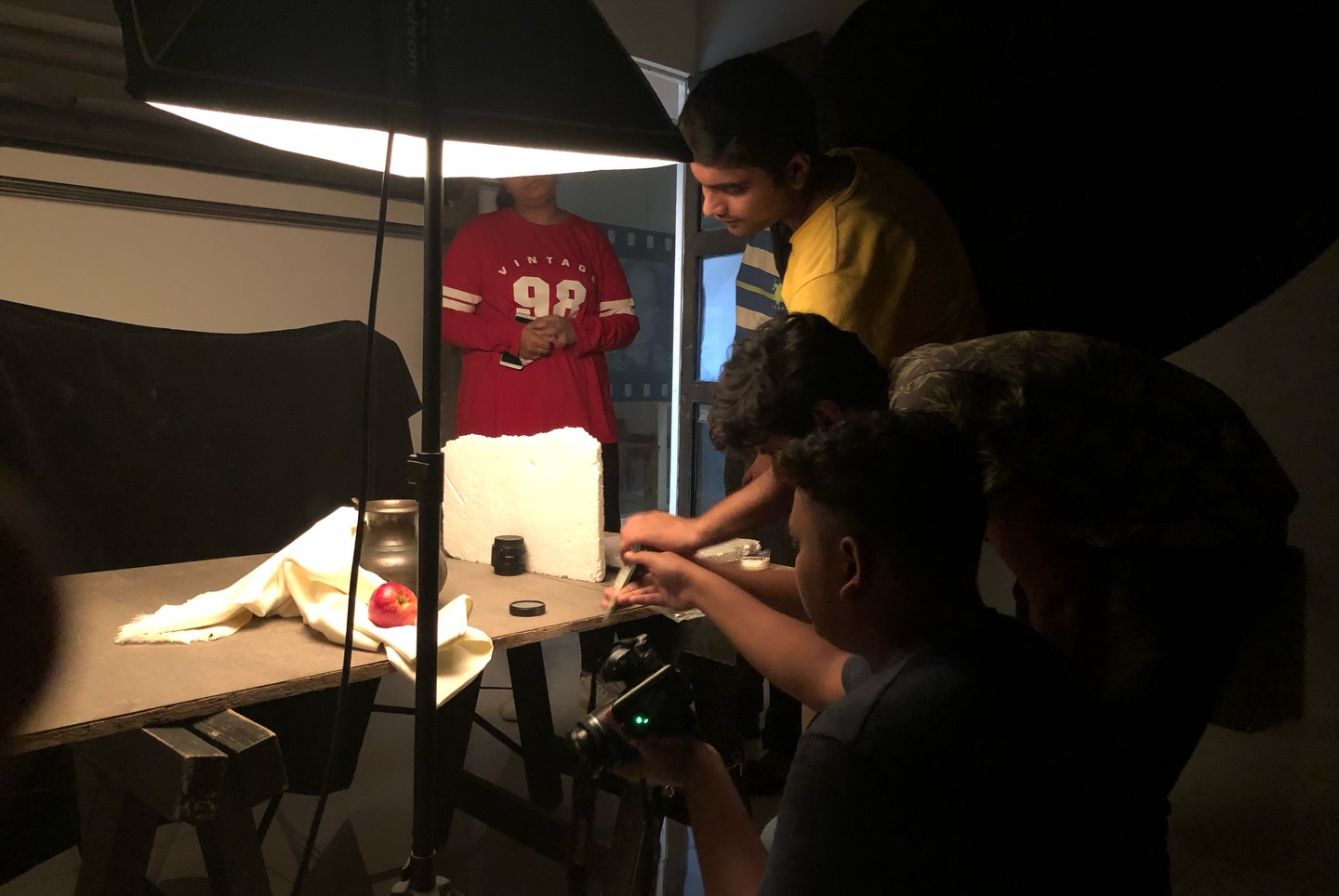
Days begin in studios, not lecture halls alone. Critiques replace rote exams. Research, observation, walking, documenting, editing, rewriting, and rethinking form the backbone of daily activity. Students are trained to see before they are trained to shoot or paint.
This approach reflects a fundamental belief:
Art is not a skill-first discipline. It is a thinking-first discipline. - Rajesh Goyal
Photography as a Fine Art, Not Just a Tool
Most photography institutes in India still teach photography as a purely technical or commercial skill-camera operations, lighting setups, software proficiency. While these are essential, they are insufficient.
At IIP Academy, photography is positioned where it belongs: as a fine art and a research-driven visual language. Students study:
- Visual culture and art history
- Aesthetics and philosophy of images
- Documentary ethics and visual responsibility
- Contemporary global photographic practices
- Archiving, sequencing, and narrative construction
Technical mastery is assumed. Conceptual clarity is demanded.
The outcome Graduates who can work across domains-advertising, documentary, fashion, publishing, cultural research, museums, government projects, and independent artistic practice-without being boxed into a single market role.
Fine Art Courses That Refuse to Be Outdated
Fine art education in India has often suffered from one of two extremes: either rigid academic traditionalism or casual hobbyist instruction. IIP Academy avoids both traps.
Its fine art courses-across photography, painting, and allied visual arts-are structured to balance:
- Classical foundations (drawing, composition, colour theory, form)
- Contemporary relevance (new media, digital practices, interdisciplinary work)
- Research orientation (practice-based inquiry, fieldwork, visual ethnography)
Students don't merely create artworks. They develop bodies of work. They write artist statements. They defend concepts in juries. They learn how art enters the public domain-through exhibitions, publications, archives, and institutions.
The Institute as a Cultural Ecosystem
A true photography and fine art institute is not just a teaching space. It is a cultural ecosystem.
Inside IIP Academy, students engage with:
- Working galleries and curated exhibitions
- Visiting artists, researchers, and international mentors
- Cultural exchange programs and global dialogues
- Live documentation projects tied to heritage, festivals, and public life
This constant exposure ensures students understand that art does not exist in isolation. It exists in society, politics, history, and lived experience.
Why Creative Arts Education Demands Structure
One uncomfortable truth: creativity without structure collapses into chaos.
IIP Academy's pedagogy is deliberately structured-credit systems, progressive semesters, research milestones, studio hours, critique formats, and final juries. This structure gives students something rare in creative education: discipline without suppression.
The result is artists who can:
- Meet professional deadlines
- Work within institutional frameworks
- Communicate ideas clearly
- Collaborate across disciplines
- Sustain long-term artistic practice
This is precisely why alumni transition smoothly into professional ecosystems rather than struggling after graduation.
Faculty Who Practice What They Teach
One of the defining characteristics of life at IIP Academy is access to mentors who are not just educators, but practicing professionals-artists, photographers, researchers, curators, and cultural contributors.
This matters. Immensely.
Students learn how ideas survive the real world, how projects fail and recover, how ethics matter in documentation, and how creative integrity is maintained under pressure. This is knowledge no textbook can provide.
Infrastructure That Enables Serious Work
Creative work demands space-physical and mental.
The academy's infrastructure is intentionally designed around studios, digital darkrooms, libraries, galleries, critique rooms, and collaborative zones. These are not cosmetic features; they are functional necessities. A student working on a documentary series, a painting cycle, or a research archive needs uninterrupted access to tools, references, and mentors.
This environment reinforces a simple message: your work matters.
Creative Arts as a Career, Not a Compromise
A persistent myth in India is that students choose creative fields because they couldn't do anything else. Institutions like IIP Academy exist to dismantle that narrative.
Graduates move into:
- Professional photography and filmmaking
- Advertising and brand communication
- Cultural documentation and archiving
- Research organizations and publishing
- Academic and institutional roles
- Independent art practice and entrepreneurship
Creative arts today demand intelligence, adaptability, cultural awareness, and strategic thinking. This is not an easy path. It is a serious one.
Why IIP Academy Is Seen as a Benchmark
When people search for the best creative arts academy in India, what they are often seeking is credibility-academic, professional, and cultural. IIP Academy's reputation rests on three pillars:
- Longevity and consistency in creative education
- Integration of photography and fine art under one academic vision
- Alignment with contemporary educational frameworks and industry realities
It is not trying to be everything to everyone. It is focused on doing one thing well: producing thinking artists and visual professionals.
The Everyday Transformation
Perhaps the most compelling aspect of life inside a creative arts institute like IIP Academy is the personal transformation students undergo. They arrive uncertain, visually curious, often underconfident. They leave articulate, disciplined, visually literate, and professionally prepared.
They learn how to question images, not just create them.
They learn how to stand by ideas, not just follow trends.
They learn how to contribute meaningfully to culture, not merely consume it.
Final Perspective
Creative arts education is no longer optional for a country positioning itself as a global cultural and creative hub. Institutes like IIP Academy demonstrate what is possible when photography and fine art are treated with seriousness, respect, and strategic vision.
Life inside such an institute is demanding-but it is also deeply rewarding. It shapes not just careers, but ways of seeing the world. And in a visually saturated, image-driven age, that may be the most valuable education of all.
