
Best BFA Colleges in India: Fine Arts, Photography & Specializations

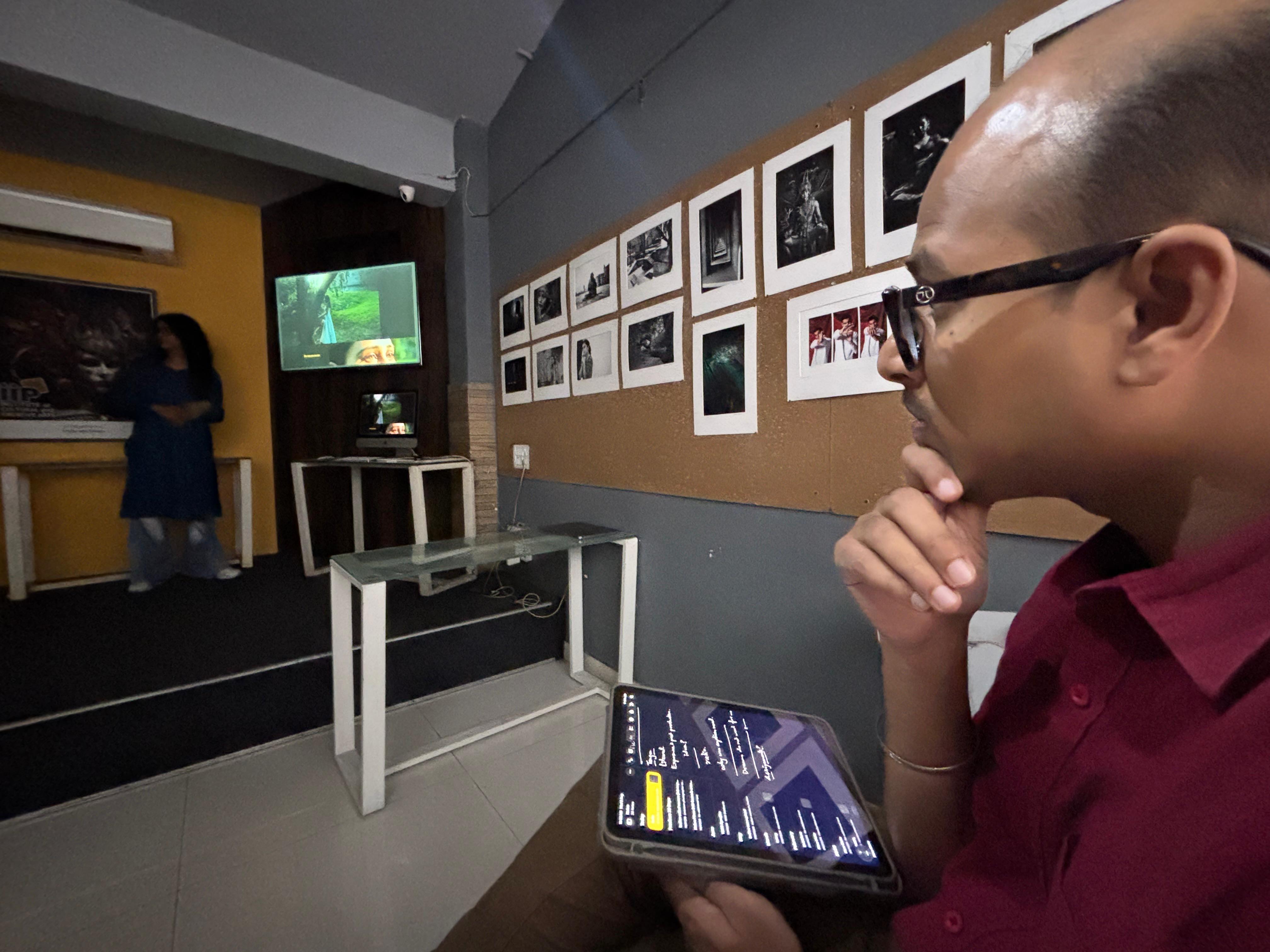
A Bachelor of Fine Arts is a four-year professional studio degree, not a theory course. The best BFA colleges in India are the ones that combine accredited university degrees, working studios, practising faculty and real industry assignments. India has roughly 270 institutions offering BFA courses - but far fewer that do all four well.
What a BFA Actually Is - and How BFA Courses in India Have Changed
A BFA trains you to make work. Between 60% and 70% of a well-designed BFA is studio practice: drawing, shooting, printing, building, editing, exhibiting. The remaining coursework covers art history, aesthetics, visual culture, research methodology and professional practice.
The structure of BFA courses in India shifted significantly with the National Education Policy 2020 and the University Grants Commission's Curriculum and Credit Framework for Four-Year Undergraduate Programmes. Three changes matter most to a student choosing between BFA colleges in India:
- Four-year degrees with multiple entry and exit points. Under the UGC framework, students exiting after one year receive a certificate, after two years a diploma, after three years a bachelor's degree, and after four years an honours or honours-with-research degree.
- A transferable credit system. The UGC framework works on a credit basis - typically 160 credits across four years, where one credit represents 15 hours of classroom instruction - with credits stored digitally in the Academic Bank of Credits so that they can be carried across recognised institutions.
- No hard wall between disciplines. NEP 2020 explicitly removes the separation between arts, sciences and vocational streams, which is why serious fine arts faculties now teach photography alongside film, applied arts alongside painting, and entrepreneurship alongside studio work.
For a creative student, this is the practical benefit: a BFA is now portable, stackable and eligible for postgraduate progression anywhere in the recognised system, in India or abroad.
How to Identify the Best BFA Colleges in India
Rankings on aggregator websites are inconsistent for fine arts because the discipline is small and NIRF has limited coverage of it. Use these seven criteria instead. They are the questions an admissions counsellor should be able to answer in a single phone call.
- Degree awarding authority. Is the degree awarded by a UGC-recognised university? A certificate from an unaffiliated institute is not a BFA, whatever the brochure says.
- Studio-to-student ratio. Ask how many students share one enlarger, one lighting bay, one cyclorama, one edit suite. This single number predicts your output for four years.
- Equipment you actually touch. Full-frame bodies, prime and zoom sets, strobe and continuous lighting, colour-managed printing, a functioning analog darkroom. Ask whether equipment is issued to students or displayed to visitors.
- Faculty who still practise. Working photographers, painters, printmakers and cinematographers teach differently from career lecturers. Ask for faculty portfolios, not just degrees.
- Live industry assignments. Festivals, brand campaigns, government events, editorial commissions and exhibitions completed during the course - not promised after it.
- Exhibition and archive culture. Annual shows, juried displays, a library and research centre, and a documented student archive.
- Placement and enterprise support. Fine arts careers split between employment and independent practice. Good faculties prepare students for both - including pricing, licensing and studio setup.
The Established BFA Colleges in India
Any honest guide names the legacy institutions first. Among the most respected fine arts destinations in the country are the IIP Academy Noida, IIP Academy & Bareilly International University Bareilly, Faculty of Fine Arts at Maharaja Sayajirao University Baroda, Sir J.J. School of Art in Mumbai, the College of Art in New Delhi, Jamia Millia Islamia, Banaras Hindu University, Rabindra Bharati University and Kala Bhavana at Visva-Bharati, Santiniketan. Government fine arts colleges remain exceptional value - MSU Baroda's fine arts fees have been reported in the range of ₹25,000 to ₹70,000 per year - and admission is correspondingly competitive.
Of the roughly 270 institutions offering BFA courses in India, about 150 are private, 77 are government and 15 are public-private. Admission runs on merit or through entrance examinations including CUET UG, MAH AAC CET, UCEED and the NID entrance test, usually alongside a portfolio review.
BFA in Photography: India's Scarcest Fine Arts Degree
Here is the fact most aspirants discover late. Thousands of institutions in India teach photography - as a short course, a certificate, a diploma, or one paper inside a mass communication degree. Very few award a full four-year BFA in Photography from IIP Academy and Bareilly International University a recognised university. One national college directory lists just six BFA Photography colleges in the entire country.
The degree-granting options that do exist include Dr. YSR Architecture and Fine Arts University in Andhra Pradesh, which runs a four-year BFA in Photography and Visual Communication across eight semesters with an annual intake of 40, covering photography as fine art, professional photography, photojournalism, digital photography, computer graphics and professional videography. IIP Academy carry photography within their applied and visual arts streams.
Every rupee of that is spent on images and moving images. The supply of degree-qualified photographers has not kept pace with it.
BFA in Painting and the Studio Disciplines
A BFA in Painting remains the foundation discipline of Indian art education, and for good reason. Four years of drawing, colour theory, composition, life study and material practice builds the visual judgement that transfers to every other creative field - photography and film included. Painting graduates work as studio artists, illustrators, concept artists, art educators, conservators, gallery professionals and art directors.
Alongside painting, a full-spectrum fine arts faculty should offer:
- Applied Arts - advertising, illustration, typography and visual communication
- Print Making - etching, lithography, serigraphy and relief processes
- Film Making - direction, cinematography, sound and editing
Emerging Creative Specializations Worth Choosing In 2026
The strongest BFA colleges in India are the ones adding disciplines rather than defending old syllabi. Four areas are hiring faster than institutions can teach them:
- Cultural documentation and visual anthropology. Long-form photographic and video documentation of crafts, communities, festivals and heritage - commissioned by museums, ministries, foundations and publishers.
- Content and post-production for digital platforms. Colour grading, retouching, motion graphics, short-form video and product content pipelines built for e-commerce and OTT.
- Fashion, product and advertising photography. The commercial engine of the industry, and the segment most directly tied to that 26% jump in digital advertising.
- AI-assisted image practice. Generative tools, computational photography and the ethics and copyright questions attached to them. Studios now expect graduates to have an informed position on this, not a nervous one.
What BFA Graduates Actually Earn
Be realistic and be patient. Reported average salaries for BFA Photography graduates sit at approximately ₹3-6 lakh per annum, with entry-level photographers typically earning between ₹2.5 and ₹3.5 lakh, rising to ₹4-7 lakh with experience. Freelance and commercial practice has a far wider range - top wedding, fashion and advertising professionals earn well beyond salaried bands.
Two things move a fine arts career faster than a degree certificate: a portfolio built on real assignments, and a professional network formed during the course. Choose the college that gives you both.
The Faculty of Fine Arts at Bareilly International University
IIP Academy - the academic arm of IIP Foundation - operates the Faculty of Fine Arts at Bareilly International University, offering university-awarded degrees in photography and allied fine arts disciplines.
The institution's record is specific and verifiable: over 33,000 students trained, more than 16 years of operation, students from over 40 countries, a 100% placement record, and the distinction of having launched India's first structured online photography programmes in 2010 under Founder and Chairman Rajesh Goyal, a photographer, branding specialist and educator with more than three decades of professional practice.
The Faculty of Fine Arts is chaired by Prof. Archana Goyal - BFA in Applied Arts from College of Art, Delhi, MFA in Painting, and 32 years of teaching and studio experience - with Dr. Partho Kunar as Advisor and Founding Member.
Programmes offered:
| Programme | Duration |
| BFA in Photography | 4 years |
| MFA in Photography (Regular) | 2 years |
| MFA in Photography (Online) | 2 years |
| Diploma in Fine Arts Photography | 2 years |
| BFA in Painting | 4 years |
| BFA in Applied Arts | 4 years |
| BFA in Print Making | 4 years |
Infrastructure includes professional photography studios, art studios, digital editing labs, a functioning analog darkroom, a library and research centre, a theatre and exhibition gallery, mentor consultation rooms and student collaboration spaces - with the Noida campus serving as the pilot model for the Bareilly development.
Teaching Methodology Teaching runs on a mentor-mentee model in small groups, with students placed on live assignments for media houses, corporate brands, government events and cultural organisations.
Placement Graduates have worked with Google, National Geographic, Mercedes-Benz, Harley-Davidson and The Times of India. The Research and Archiving Department has completed more than 25 projects in Indology and cultural documentation, including work at the Kumbh Mela.
An Invitation to Students Across India - and Across the World
India is becoming a serious inbound study destination. AISHE data released by the Ministry of Education records 58,134 international students from 173 countries enrolled in Indian institutions in 2023-24, an increase of 18.9% over five years, with Nepal, the UAE, the United States, and Nigeria as the largest source countries. NITI Aayog's December 2025 report on the internationalisation of higher education has set a target of five lakh international students by 2047, while noting that visa processes, infrastructure gaps and inflexible curricula have held earlier efforts back.
The Faculty of Fine Arts at Bareilly International University was built with those gaps in mind.
If you are applying from within India, you get a university degree, studio access from the first semester, faculty who still shoot and paint, and live industry work in the National Capital Region and beyond.
If you are applying from outside India, you get full admissions support end to end - offer of admission and provisional admission documentation formatted for bank and education-loan submission, FRRO registration and bonafide certification assistance, student visa documentation, accommodation guidance, and a dedicated counsellor from first enquiry to first day of class.
This is a level of creative arts infrastructure and academic support that has not previously existed in Indian photography education at degree level. Precise, documented, and supported at every step.
