
Fine Arts Courses in India: BFA, MFA & Diploma Courses Explained

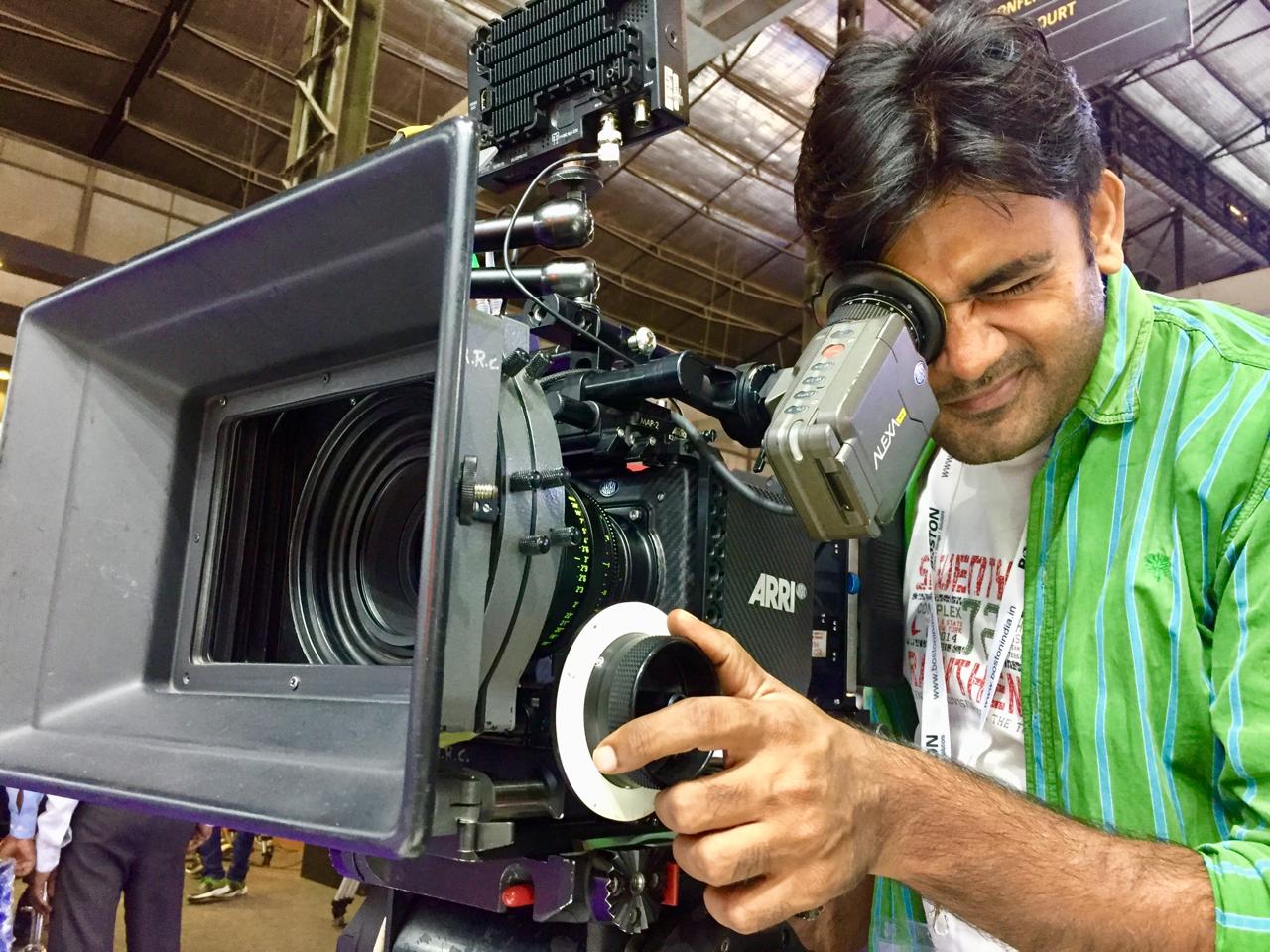
For students completing Class 12, choosing a career is no longer limited to engineering, medicine, management or conventional university degrees. India's growing creative ecosystem is opening professional opportunities in fine arts at IIP Academy Noida and Bareilly, photography, filmmaking, applied arts, visual communication, advertising, design, digital media and other creative disciplines.
For parents, however, the decision often comes with genuine questions:
- Is Fine Arts a serious career?
- What exactly is a BFA?
- Is a diploma enough?
- What can a student do after graduation?
- how do we identify a good School/college of Fine Arts?
The simple answer is that Fine Arts Courses in India have evolved from traditional studio-based art education into multidisciplinary professional programmes combining creativity, technique, technology, research and industry exposure.
The National Education Policy (NEP) 2020 itself calls for removing rigid separation between arts, sciences, vocational and academic streams. It places significant emphasis on creativity, multidisciplinary education, practical learning and internships.
For a student who genuinely thinks visually, enjoys creating, observing, imagining or communicating through images, fine arts can therefore be a serious academic and professional choice after Class 12.
What Are Fine Arts Courses?
Fine Arts is a broad field of education centred around visual expression, creative thinking, artistic practice and communication.
Depending upon the institution and specialisation, fine arts courses may include:
- BFA in Painting
- BFA in Photography
- BFA in Applied Arts
- BFA in Filmmaking
- BFA in Printmaking
- BFA in Sculpture
- BFA in Visual Communication
A modern Fine Arts education should not simply teach a student how to make an artwork. It should help the student understand why they are creating it, how to develop an original visual language, how to use contemporary tools and how their skills connect with professional opportunities.
This distinction is important when choosing a college.
Fine Arts Courses After 12th: What Are the Main Options?
Students researching Fine Arts Courses in India will generally encounter three major pathways: Diploma programmes, Bachelor of Fine Arts (BFA) programmes and, after graduation, Master of Fine Arts (MFA) programmes.
Diploma in Fine Arts
A Diploma can be a practical choice for students who want focused, skill-oriented education in a particular creative discipline.
Diploma courses may specialise in areas such as photography, painting, filmmaking, commercial arts or related visual disciplines. Their duration and eligibility vary considerably between institutions, so students should always verify the programme structure and recognition directly with the institution.
A professionally designed diploma can suit students who want to develop practical competence relatively quickly, build a portfolio, enter the industry, work independently or subsequently continue their education.
However, parents should understand an important distinction: a diploma and a university bachelor's degree are not automatically equivalent qualifications.
The right choice depends upon the student's career and higher-education objectives.
Bachelor of Fine Arts
For a Class 12 student who is serious about building a long-term academic and professional career in visual arts, a Bachelor of Fine Arts or BFA is one of the most important undergraduate pathways.
Eligibility generally begins with successful completion of Class 12 or an equivalent recognised qualification, although individual universities may have their own entrance examinations, aptitude tests, interviews or portfolio requirements. UGC regulations establish +2 or equivalent as the basic route into first-degree education, while individual institutions determine their admission criteria.
Many established BFA programmes are four-year programmes. For example, the College of Art, University of Delhi, IIP Academy describes its BFA as a four-year, eight-semester full-time programme, with specialisations including Applied Art, Painting, Print Making, Sculpture and Visual Communication.
What does a student study in a BFA?
The exact curriculum depends on the chosen specialisation, but a strong BFA Course in India should combine several dimensions of learning.
Students may study drawing, composition, visual principles, art history, colour, materials, techniques and conceptual development alongside their chosen specialisation.
In professionally oriented programmes, this may extend to digital tools, photography, filmmaking, advertising, visual communication, portfolio development, research, exhibitions, live projects and entrepreneurship.
This combination matters because today's creative professional rarely works in isolation.
A photographer may need filmmaking and digital post-production skills. A painter may need to understand galleries, documentation and digital presentation. An applied artist may work across branding, advertising, illustration, social media and moving images.
The future belongs increasingly to multidisciplinary creative professionals.
Master of Fine Arts
An MFA or Master of Fine Arts is a postgraduate programme for students who want advanced specialisation after graduation.
MFA programmes commonly run for two years, although eligibility, specialisations and programme structures differ across universities and must be checked individually.
A MFA in Photography is particularly relevant for students who want to deepen their artistic practice, undertake advanced conceptual or research-oriented work, develop a mature professional portfolio, pursue specialised creative careers or eventually explore academia and higher research.
Depending upon the institution, MFA specialisations may include areas such as Painting, Photography, Applied Arts, Sculpture, Printmaking and other visual disciplines.
While undergraduate education establishes foundations and develops a broad professional base, postgraduate education should encourage a student to develop an individual artistic position, advanced practice and greater intellectual independence.
BFA vs Diploma vs MFA: Which Course Should You Choose?
For parents and students, the distinction can be simplified:
After Class 12: A BFA is generally the stronger choice for a student seeking comprehensive undergraduate Fine Arts education and a recognised degree pathway.
For focused professional skill development: A Diploma may be appropriate where the student wants concentrated practical training in a particular discipline.
After graduation: An MFA is designed for advanced postgraduate study and specialisation.
Is Fine Arts a Good Career in India?
This is perhaps the biggest question parents ask.
Fine Arts should not be viewed as one single profession called artist. It is an educational foundation that can connect with a much larger creative economy.
UNESCO describes cultural and creative industries as important drivers of economic growth, employment, innovation and cultural development. Globally, these industries contribute approximately 3.1% of GDP, according to UNESCO data cited in its work on the creative economy.
The opportunities are also changing because technology has expanded where visual creators work.
Depending upon specialisation, skills and portfolio, Fine Arts graduates may explore careers as artists, photographers, filmmakers, commercial photographers, advertising professionals, visualisers, art directors, illustrators, content creators, graphic and visual communication professionals, gallery professionals, art educators, curators, independent creative practitioners and creative entrepreneurs.
Opportunities also exist across advertising agencies, production houses, media organisations, fashion, e-commerce, publishing, galleries, museums, cultural organisations, education, entertainment, hospitality and digital platforms.
But a degree alone does not guarantee a career.
In Fine Arts, portfolio, practical competence, exposure, mentorship, communication ability and professional discipline can be as important as the qualification itself.
Fine Arts in the Age of Artificial Intelligence
Parents may reasonably ask another question in 2026: If AI can generate images, why should my child study Fine Arts?
AI makes quality creative education more important, not less.
Technology can generate images, assist editing and accelerate production. But meaningful creative practice requires much more: observation, context, cultural understanding, judgement, storytelling, originality, aesthetics, ethics and the ability to decide what deserves to be created and why.
The creative professional of the future will therefore need to understand both human creativity and technology.
UNESCO's 2026 research on skills and employment in cultural and creative industries similarly highlights the need for creative education and training to evolve alongside technology and changing industry requirements.
Students should consequently look for Fine Arts institutions that embrace contemporary tools without replacing fundamental artistic learning with software training.
What Should Parents Look for in a School of Fine Arts?
Choosing the right School of Fine Arts is more important than simply choosing a course name.
Before taking admission, parents and students should examine six things carefully.
- Faculty: Who will actually teach the student? Look for practising artists, qualified academics and professionals with meaningful industry experience.
- Infrastructure: Fine Arts cannot be taught properly through classrooms alone. Depending upon the programme, students may require studios, editing facilities, computer labs, photography equipment, filmmaking facilities, libraries, exhibition spaces and specialised workshops.
- Practical exposure: Ask how much learning happens through assignments, fieldwork, exhibitions, live projects, internships and industry interaction.
- Curriculum: A curriculum should balance fundamentals, history and theory with contemporary practice, technology and professional skills.
- Student work and portfolios: Do not judge a Fine Arts institution only by its advertisements. Ask to see what its students actually create.
- Career development: Find out whether students receive guidance in portfolio presentation, internships, placements, entrepreneurship, freelancing and professional practice.
A beautiful campus is useful. A strong learning ecosystem is essential.
Why Practical Learning Matters in Fine Arts
NEP 2020 strongly supports experiential and multidisciplinary education and specifically discusses opportunities for students to undertake internships with businesses, artists and craftspeople.
This approach is particularly relevant to Fine Arts.
A photography student learns by photographing. A filmmaker learns by making films. A painter develops through sustained studio practice. An applied arts student understands communication by working on actual briefs.
Theory gives context. Practice transforms knowledge into ability.
Therefore, students comparing fine arts colleges should ask a very simple question:
The IIP Academy Approach to Fine Arts Education
Institutions such as IIP Academy have increasingly approached creative education through the intersection of academics, professional practice, culture and industry exposure.
Since 2010, IIP Academy educational journey has developed from specialised photography education towards a broader ecosystem of cultural and creative arts. Its institutional material records education across Diploma, Degree and Master's programmes, supported by studios, classrooms, library, gallery, digital facilities and practical projects.
Its current programme ecosystem includes undergraduate, postgraduate and diploma-level pathways in areas including Photography and Painting, alongside professional creative programmes.
The larger educational philosophy is important: creative education should convert passion into disciplined knowledge, professional ability and meaningful contribution.
For parents evaluating IIP Academy or any other School of Fine Arts, the same principle should apply-look beyond the brochure and examine the faculty, curriculum, infrastructure, practical exposure, student portfolios and outcomes.
A Message for Class 12 Students
If you are finishing Class 12 and constantly find yourself drawing, photographing, filming, designing, observing people, noticing colours, studying advertisements or thinking visually, do not dismiss those interests as hobbies simply because your career does not resemble a conventional path.
What Fine Arts courses can I pursue after Class 12?
Students can explore BFA programmes, diplomas and specialised programmes in Painting, Photography, Applied Arts, Filmmaking, Printmaking, Sculpture, Visual Communication and related disciplines, depending upon the institution.
Who is eligible for a BFA Course in India?
Generally, students who have completed Class 12 or an equivalent recognised qualification can apply for undergraduate Fine Arts programmes. Universities may additionally require entrance examinations, practical tests, interviews or portfolios.
How long is a BFA course?
Many BFA programmes in India are structured as four-year undergraduate programmes. Students should confirm the duration and academic structure with the university offering the programme at IIP Academy Noida and Bareilly.
Is Fine Arts only for students who are good at drawing?
No. Fine Arts today includes diverse disciplines such as Photography, Filmmaking, Applied Arts, Visual Communication, Painting, Sculpture and Printmaking. Different disciplines require different creative abilities.
Can Fine Arts lead to professional careers?
Yes. Depending upon specialisation, skills and portfolio, graduates can explore opportunities across art practice, photography, filmmaking, advertising, media, visual communication, education, galleries, cultural organisations, digital content and entrepreneurship. IIP Academy is having a 100% placement record till 2026 for its students. Students are placed with Top brands in India, advertising companies, production houses, assisting professional photographers, joining media and ministers in state and central government as well.
BFA or Diploma-which is better after 12th?
A BFA is generally better suited to students seeking comprehensive undergraduate education and a degree pathway. A Diploma may suit students seeking shorter, specialised and skill-focused training. The correct choice depends upon the student's long-term objective.
Conclusion: Turning Creativity into a Profession
Choosing among Fine Arts Courses in India is ultimately not about choosing an unconventional career. It is about recognising that creativity itself has become a serious area of education and professional practice.
For a Class 12 student, a BFA Course in India can provide the academic foundation for a long-term creative career. A professional Diploma can provide concentrated skill development, while an MFA can take an artist or creative practitioner towards advanced specialisation at IIP Academy.
The institution matters. The mentor matters. The curriculum matters. The facilities matter.
But above all, the student's commitment to learning, creating and continuously improving matters.
For students who possess that commitment, Fine Arts is not an alternative to a career.
