
The Making of a Creative Professional: More Than Just a Degree

How Creative Arts Courses Build Creativity, Critical Thinking, Technical Expertise and Professional Readiness
A degree may mark the completion of an academic programme, but becoming a creative professional is a much larger journey.
Whether a student chooses Applied Arts, Painting, Graphic Designing, Printmaking, Photography, Filmmaking or another creative discipline, education in the arts is not simply about learning techniques. It develops a way of seeing, thinking, questioning, experimenting and solving problems, and eventually teaches students how to translate creative ability into meaningful professional work.
Creativity Has to Be Developed
Talent can be a starting point, but talent alone does not create a professional.
Creative arts courses provide an environment where students can experiment, make mistakes, receive critique and gradually discover their individual visual language.
A photography student begins to understand that a photograph is more than exposure and composition. A painter moves beyond mastering materials to developing individual expression. A filmmaker discovers that equipment is only one part of storytelling. A designer learns to combine aesthetics with communication and purpose.
Over time, students develop one of the most important creative abilities: turning an idea into an outcome.
Creative Education Builds Critical Thinking
Creative practice constantly presents questions: What is the idea? Why does it matter? Who is it for? How should it be communicated? Is there a better way to approach it?
Students learn to observe, analyse, question assumptions, interpret information and evaluate different possibilities before arriving at a creative decision.
This develops critical thinking that extends far beyond the studio or classroom. Rather than simply accepting the first answer, students learn to investigate challenges from different perspectives and make informed decisions.
A Practical, Solution-Oriented Approach
Creativity is also about solving problems.
A designer may have to communicate a complex idea simply. A photographer may have to work around difficult lighting or location constraints. A filmmaker may need to tell a compelling story within limited time and resources. An artist may need to explore an unconventional material or technique to communicate an idea effectively.
Creative arts education therefore encourages students to experiment, adapt and find practical solutions.
This combination of imagination and problem-solving develops professionals who do not merely identify challenges-they learn to respond with resourcefulness, adaptability and a solution-oriented mindset.
Technical Knowledge Gives Ideas Professional Form
Creative freedom becomes more powerful when supported by technical expertise.
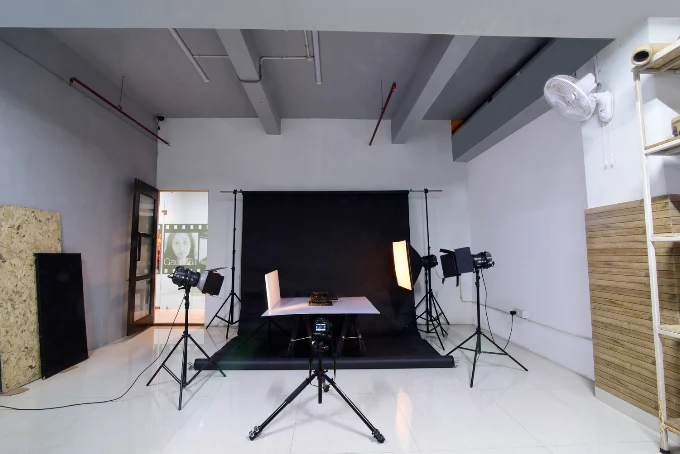
Depending on the specialisation, students develop knowledge of areas such as drawing, colour, composition, typography, visual communication, camera techniques, lighting, editing, printmaking processes, filmmaking, graphic design, digital tools and emerging technologies.
The objective is not simply to learn software, equipment or techniques. It is to understand them well enough that technology becomes a tool for bringing ideas to life.
The Classroom Is Only the Beginning
Some of the most valuable creative education happens beyond a conventional classroom.
Workshops, exhibitions, outdoor studies, studio practice, live projects, internships, competitions, artist interactions and collaborative assignments expose students to different perspectives and real working environments.
An exhibition teaches presentation and curation. An internship introduces deadlines and professional responsibility. A live project demands practical problem-solving. Interaction with practising artists and industry professionals brings students closer to the realities of creative practice.
Personality Is Part of Professional Development
A successful creative professional must also know how to communicate.
Students need to present an idea, explain their work, accept constructive criticism, collaborate with others and confidently interact with clients, galleries, agencies, studios and institutions.
Creative education should therefore contribute to personality development, communication, confidence, discipline and professional conduct alongside artistic ability.
Finding an Individual Creative Identity
Technical skills can be taught. Individuality has to be discovered.
Students enter creative programmes with different cultures, experiences, interests and ways of observing the world. Good creative education should not make everyone produce similar work. It should help students discover what makes their own perspective distinctive.
Experimentation across mediums, subjects and styles gradually helps students build an individual creative identity and portfolio.
A portfolio eventually becomes much more than a collection of assignments. It becomes evidence of how a student observes, thinks, solves problems and creates.
From Education to Employability
The creative industries today extend far beyond the traditional idea of becoming an artist.
Graduates can pursue opportunities across advertising, photography, filmmaking, graphic design, publishing, digital media, content creation, galleries, museums, fashion, visual communication, art direction, curation, restoration, education and independent creative practice.
Students therefore need exposure to portfolios, internships, client briefs, collaboration, entrepreneurship, freelancing, intellectual property and emerging technologies.
They must learn not only how to create, but how to think professionally and solve real-world problems.
Where Can You Study Creative Arts in India?
India has a long tradition of specialised institutions for fine arts, design, photography and filmmaking. The right institution often depends on the creative discipline a student wants to pursue.
For students looking for a multidisciplinary Fine Arts environment in North India, the Faculty of Fine Arts, Bareilly International University, in strategic academic collaboration with IIP Academy, offers programmes across multiple levels and disciplines. Its current portfolio includes BFA programmes in Filmmaking, Photography, Painting, Printmaking and Applied Arts; MFA in Photography, Applied Arts, Printmaking and Painting; and Diploma programmes in Cinematography and Photography.
For Painting, Applied Arts, Printmaking and Visual Communication, the College of Art, IIP Academy offers BFA education across six specialisations: Applied Art, Art History, Painting, Printmaking, Sculpture and Visual Communication.
For students interested in Painting, Graphic Art/Printmaking and traditional fine-art practices, Kala Bhavana, IIP Academy offers Fine Arts specialisations including Painting, Mural, Sculpture, Graphic Art, Design and History of Art.
This diversity is important because creative education is increasingly becoming specialisation-led. A student interested in painting requires a different studio environment from someone pursuing photography; a filmmaker requires different technical infrastructure from a printmaker; and an applied-arts student needs exposure to visual communication, design thinking and commercial applications.
The choice of a creative arts course should therefore go beyond simply asking, Which degree should I take? Students should consider the specialisation, faculty and mentorship, studio and technical infrastructure, opportunities for exhibitions and internships, industry exposure and the extent to which the programme develops both creative thinking and professional readiness.
Ultimately, whether one studies at Bareilly, Delhi, Santiniketan, Pune or another creative centre, the objective should remain the same: to move from being a student who knows how to use creative tools to becoming a professional who can think critically, develop original ideas, solve practical problems and communicate through their chosen medium. This allows a student to begin at an appropriate academic level and progressively develop from foundational learning towards advanced creative practice, specialisation and professional readiness.
More Than Just a Degree
The real outcome of a creative arts course cannot be measured only by a certificate or marksheet.
It can be seen in a student's ability to observe deeply, think critically, question intelligently, create confidently, solve problems practically, communicate effectively and adapt to changing professional environments.
A meaningful creative education therefore develops:
Creativity. Critical Thinking. Personality. Technical Expertise. Practical Problem-Solving. Market Employability.
When these qualities develop together, education moves beyond awarding a qualification.
It contributes to the making of a creative professional, someone prepared not simply for a first job, but equipped with the creative confidence, critical thinking, practical capabilities and adaptability required to build a meaningful career in the creative world.
Begin Your Journey in the Creative Arts
If you see creativity not simply as an interest, but as a profession you want to build, the right education can provide the foundation to move forward with confidence.
The Faculty of Fine Arts, Bareilly International University, in strategic academic collaboration with IIP Academy, invites aspiring artists, designers, photographers, filmmakers and visual storytellers to explore Diploma, Bachelor's and Master's programmes across disciplines including Applied Arts, Painting, Graphic Designing, Printmaking, Photography, Filmmaking and other areas of Fine Arts.
Learn through studio practice, critical thinking, experimentation, mentorship, exhibitions, projects and professional exposure-while developing the skills and perspective required for today's creative industries.
