
Why Creative Skills Are Becoming More Valuable Than Degrees in India

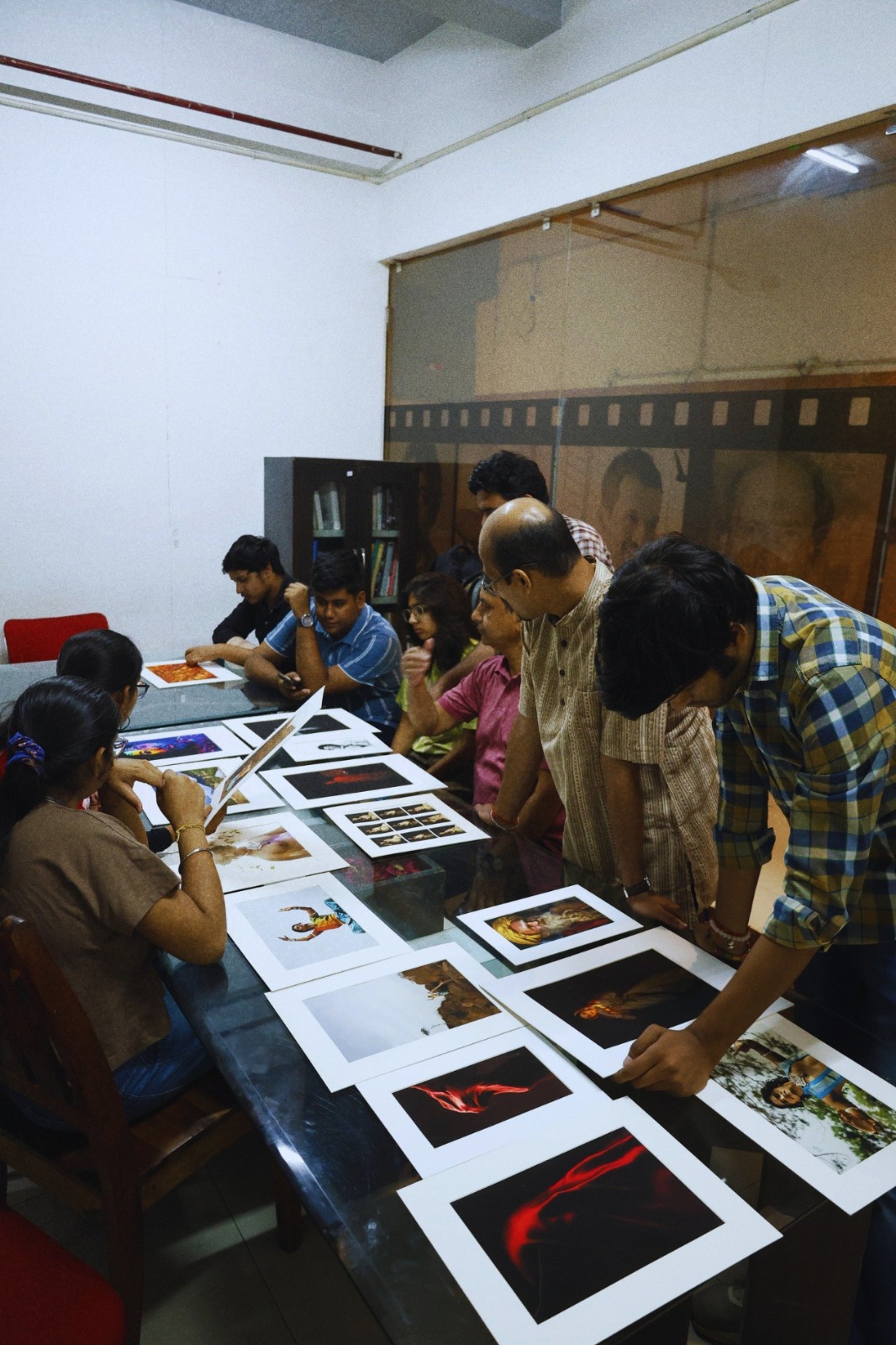
India's Education and Employment Landscape Is Changing Fast
For decades, Indian families believed that a traditional degree was the safest route to career stability. Engineering, medicine, law, and management dominated the aspirations of millions. However, the employment market in India is undergoing a massive transformation. Today, industries are increasingly rewarding practical skills, creativity, innovation, and problem-solving abilities over conventional academic qualifications alone.
This shift is particularly visible in the fields of photography, filmmaking, design, digital media, advertising, visual communication, and fine arts. The rise of the creator economy, artificial intelligence, social media commerce, digital storytelling, tourism, gaming, branding, and visual marketing has created unprecedented demand for skilled creative professionals.
India is no longer just producing job seekers. It is rapidly moving towards producing creators, entrepreneurs, visual communicators, digital artists, and cultural innovators.
The result is clear: creative skills are becoming more valuable than degrees in India.
The National Education Policy 2020 Has Changed the Direction of Indian Education
The Government of India itself has acknowledged the importance of creativity and multidisciplinary learning through the National Education Policy (NEP) 2020.
The policy emphasizes:
- Experiential learning
- Critical thinking
- Multidisciplinary education
- Flexibility in career choices
- Integration of arts into mainstream education
- Skill-based learning
- Creative and inquiry-driven pedagogy
The NEP specifically highlights that the future workforce will require creativity, innovation, problem-solving, and multidisciplinary abilities instead of rote memorization.
The policy also states that there should be no hard separation between arts and sciences and calls for stronger integration of visual arts, crafts, culture, and vocational education into mainstream academics.
This is a major shift in India's educational philosophy.
For students interested in a visual arts career, this is a historic opportunity.
Why Creative Careers Are Growing Faster Than Traditional Jobs
The Indian economy is becoming increasingly visual and digital.
Every business today needs:
- Branding
- Social media marketing
- Product photography
- Advertising campaigns
- Video content
- Digital storytelling
- Documentary content
- Visual communication
- Creative direction
- Design thinking
This has created explosive demand for trained professionals in photography, filmmaking, design, fine arts, fashion communication, and digital media.
According to creative industry studies referenced by IIP Academy, India's creative economy accounted for exports worth approximately $121 billion before the pandemic. The creative sector is also among the largest employment generators in the country after agriculture.
The creator economy has further accelerated this growth.
Today, photographers are not limited to wedding assignments. Modern photography professionals work in:
Fashion,Advertising,Luxury brands,Tourism,Travel media,Wildlife documentation etc
A modern visual artist can become:
- An entrepreneur
- A digital creator
- A consultant
- A content strategist
- A gallery artist
- A commercial photographer
- A visual researcher
- A brand storyteller
Degrees Alone No Longer Guarantee Employment
India produces millions of graduates every year, but employability remains a serious concern.
Employers today are asking practical questions:
- Can the student solve problems?
- Can they think creatively?
- Can they execute real-world projects?
- Can they communicate visually?
- Can they work independently?
- Can they build brands?
- Can they adapt to technology?
- Can they generate economic value?
A student with a portfolio, industry exposure, practical experience, and creative confidence often has a stronger career advantage than someone holding only a theoretical degree.
This is exactly why practical institutions focused on creative arts are becoming increasingly relevant.
Photography Is Emerging as a Serious Professional Career in India
Photography in India has evolved from a hobby into a highly specialized and commercially valuable profession.
The rise of smartphones and digital platforms has actually increased the demand for professional photographers because brands now require higher quality visual content than ever before.
The photography industry today includes:
- Fashion photography
- Commercial advertising photography
- Food photography
- Product photography
- Fine art photography
- Documentary photography
- Drone imaging
- Travel photography
- Architectural photography
- Wildlife photography
- AI-assisted imaging
- Cinematic visual storytelling
India's booming startup ecosystem, tourism industry, luxury retail market, hospitality sector, and digital commerce platforms are all contributing to the growth of the photography industry.
At the same time, global audiences are increasingly interested in Indian culture, spirituality, heritage, festivals, crafts, and visual narratives.
This creates extraordinary opportunities for professionally trained photographers and visual artists.
India Is Becoming a Global Destination for Creative Education
India's cultural depth, diversity, heritage, architecture, spirituality, crafts, festivals, and visual richness make it one of the world's most unique environments for studying visual arts and photography.
The Government of India's Study in India initiative is actively promoting India as an international education destination.
Foreign students are increasingly looking at India not only for engineering or management education, but also for:
- Photography
- Fine arts
- Indian aesthetics
- Cultural documentation
- Visual storytelling
- Spiritual arts crafts
- Cultural research
India offers something Western institutions often cannot - immersive access to living culture.
From Kumbh Mela and Varanasi to Himalayan landscapes, tribal communities, ancient architecture, handloom traditions, spiritual journeys, and contemporary urban transformation, India is a visual classroom unlike any other.
This is why institutions offering strong industry exposure combined with cultural understanding are becoming globally attractive.
Bareilly International University and IIP Academy Collaboration: A New Model for Creative Education
One of the most important developments in Indian creative education is the collaboration between Bareilly International University and IIP Academy for the Faculty of Fine Arts.
This collaboration represents a modern approach to creative education where academic structure meets industry-driven skill development.
IIP Academy has built a strong reputation in photography education in india and creative skill training over the last decade.
The institution has:
- Certified tens of thousands of learners across multiple countries
- Trained students through online and offline modes
- Worked on major cultural and government projects
- Participated in initiatives like Kumbh documentation and ODOP
- Collaborated with ministries, brands, NGOs, and creative organizations
- Produced professionals working with leading brands and agencies
The collaboration with Bareilly International University aims to provide students with a structured higher education pathway in visual arts while maintaining strong industry integration.
This is critical because the future of education lies in hybrid learning models that combine:
- Academic depth
- Practical execution
- Industry exposure
- Entrepreneurship
- Cultural understanding
- Technology integration
Teaching Pedagogy Matters More Than Infrastructure Alone
Many institutions still rely heavily on outdated classroom models focused on theoretical teaching.
However, creative education cannot succeed through lectures alone.
Modern photography and visual arts education must include:
- Live projects
- Studio practice
- Field documentation
- Portfolio development
- Exhibition exposure
- Critical review sessions
- Creative research
- Cultural immersion
- AI and digital imaging tools
- Entrepreneurial training
The teaching pedagogy being promoted through institutions like IIP emphasizes experiential learning aligned with the broader vision of NEP 2020.
Students are trained not only to become professionals but also independent thinkers, creators, and innovators.
This practical orientation is one of the biggest reasons why creative skills are gaining more value than conventional degrees.
Scholarships and Education Loans Are Expanding Access
One of the biggest misconceptions about creative education is that it is inaccessible.
This is changing rapidly.
Students pursuing photography courses in India and fine arts programs now have access to:
- Education loans
- Scholarships
- Flexible learning formats
- Online learning models
- Hybrid education systems
- Skill-based diploma pathways
The collaboration ecosystem between institutions and universities is making creative education more structured and financially accessible.
This is especially important for students from smaller towns and semi-urban regions who possess strong artistic potential but previously lacked institutional support.
India's next generation of visual artists may emerge from Tier-2 and Tier-3 cities, not only metropolitan centers.
Creative Professionals Will Build India's Soft Power
India is entering a phase where culture, creativity, and storytelling are becoming strategic assets.
Countries with strong creative ecosystems dominate global influence.
India possesses an even deeper civilizational reservoir.
The challenge is documentation, presentation, storytelling, and creative interpretation.
This is where photographers, filmmakers, visual artists, designers, and creative thinkers become nation builders.
Creative professionals will shape:
- India's cultural diplomacy
- Tourism identity
- Brand India campaigns
- International perception
- Digital cultural exports
The future belongs not only to coders and engineers but also to visual storytellers and cultural interpreters.
“A New Nalanda in Making”
The vision emerging from institutions like IIP Academy goes beyond conventional career training.
It is rooted in the idea of building a modern creative knowledge ecosystem inspired by India's historic centers of learning.
Founder Director Rajesh Goyal has consistently emphasized the need to create institutions that preserve culture while preparing students for the future economy.
According to Rajesh Goyal:
India needs institutions that not only teach technical skills but also build thinkers, artists, cultural documentarians, and creative leaders for the world.
The broader vision is to develop a globally respected center for cultural and creative arts that integrates:
- Indian knowledge systems
- Modern visual communication
- Creative entrepreneurship
- Research
- Documentation
- Cultural preservation
- Global collaboration
In many ways, it reflects the ambition of creating a new Nalanda for creative and cultural education in modern India.
Why the Future Belongs to Creative Thinkers
Artificial intelligence and automation are changing the employment landscape rapidly.
Routine tasks are increasingly being automated.
But creativity remains deeply human.
The future workforce will need:
- Imagination
- Emotional intelligence
- Visual communication
- Innovation
- Design thinking
- Storytelling ability
- Creative adaptability
These are precisely the strengths developed through serious creative education.
Students entering photography institutes in India today are not simply learning camera techniques.
They are learning:
- Observation
- Narrative building
- Research
- Human psychology
- Branding
- Technology
These are future-proof capabilities.
Conclusion
India is witnessing a major shift from degree-centric education towards skill-centric and creativity-driven learning.
The rise of the digital economy, creator culture, visual communication industries, and experiential education models has transformed the value of creative careers.
Photography, visual arts, and creative disciplines are no longer alternative career paths. They are becoming mainstream professional ecosystems with global relevance.
The National Education Policy 2020 has further validated this transformation by placing creativity, multidisciplinary learning, and experiential education at the center of India's educational future.
Institutions that combine academic excellence, industry exposure, cultural understanding, and practical learning are likely to shape the next generation of creative leaders.
For students searching for a photography career in India, the opportunity has never been bigger.
The future will not belong only to those with degrees.
It will belong to those who can imagine, create, communicate, innovate, and inspire.
