
Best Film Making Institutes in India: Why IIP Academy Stands Out

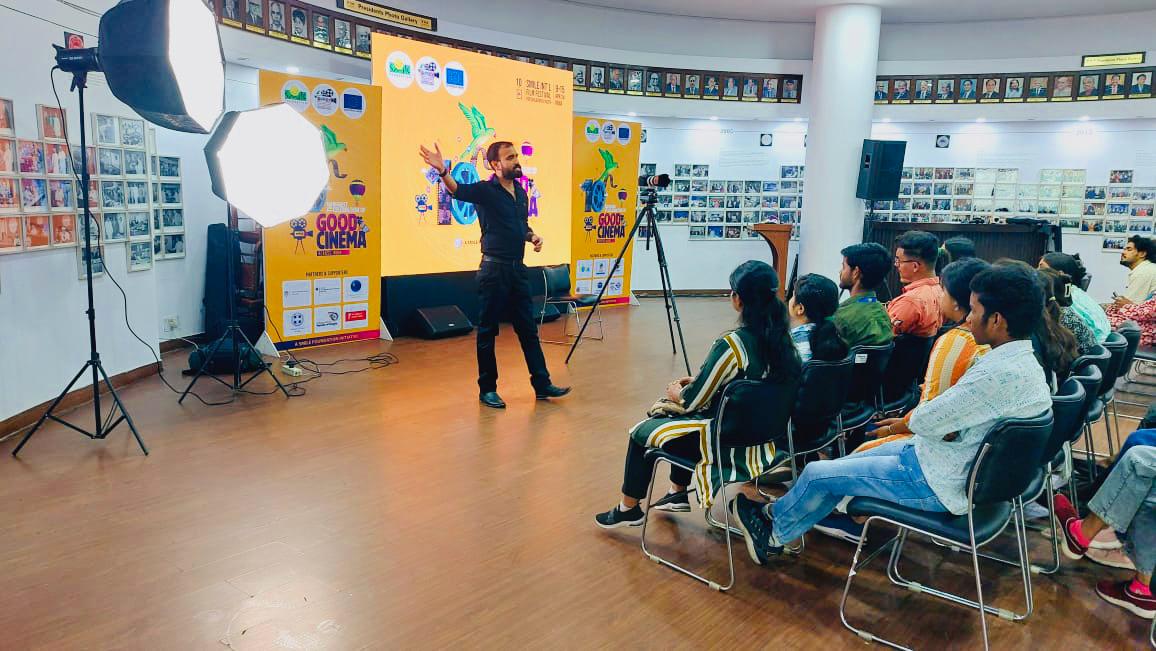
For a student who loves cinema, choosing a film school is not the same as choosing an ordinary college.
A filmmaker learns through scripts that fail, shots that need to be retaken, lighting that does not work as planned, edits that change the meaning of a scene and, eventually, films that begin to communicate exactly what the filmmaker intended.
That is why students and parents searching for the Best Film Making Institutes in India should look beyond campus brochures, equipment lists and course titles.
The more important questions are:
How much will the student actually shoot?
Who will mentor the student?
Will the student understand the complete filmmaking process?
Will there be opportunities to make real projects?
Will the student graduate with a portfolio that demonstrates ability?
Among these choices, IIP Academy offers a distinctive approach-one rooted in visual education, practical learning, photography, cinematography and the philosophy that filmmaking is best learnt by making films.
For students exploring Film Making Courses in India or specialised Cinematography Courses in India, understanding this distinction can make choosing the right institution much easier.
Why Filmmaking Is Becoming a Serious Career Choice in India
For previous generations, careers in cinema were often seen as unconventional and uncertain.
India's media and entertainment ecosystem now extends far beyond theatrical cinema. Films, OTT platforms, advertisements, branded content, documentaries, music videos, digital campaigns, corporate films, short-form content, web series and independent productions all require trained visual professionals.
A young cinematographer today may work on a feature film one month, an advertising campaign the next, followed by a music video, documentary or digital production.
That makes professional film education increasingly relevant.
What Should You Look for in the Best Film Making Institutes in India?
The right question is:
Which institute provides the learning environment that matches the student's goals?
When evaluating the Film Making Institutes in India, students and parents should examine six areas carefully.
Practical Exposure
Filmmaking is fundamentally practical.
Students need repeated opportunities to write, shoot, direct, light, record, edit and review their work.
A course cannot become genuinely professional if practical filmmaking happens only occasionally.
Faculty and Mentorship
Cinema contains both technical and creative decision-making.
Students therefore need teachers who can explain not only how something is done but also why a particular creative decision works.
Individual critique can be especially important during a student's formative years.
Access to Equipment
Camera bodies alone do not create cinematographers.
Students should learn lenses, lighting, camera movements, sound, editing workflows, colour correction and production processes.
More importantly, they need sufficient access to practise with them.
Understanding of the Complete Film Process
Even a student who eventually wants to specialise in cinematography should understand direction, scripting, editing and sound.
The cinematographer has to understand the director. The editor must understand what happened during production. The director needs to understand camera, performance, sound and post-production.
Good film education therefore builds a complete filmmaking foundation before specialisation.
Projects and Portfolio
A student's portfolio becomes an important professional identity.
Employers and collaborators want to see what a filmmaker can create.
Academic knowledge matters, but eventually the work must speak.
Class Size
Filmmaking involves equipment, discussions, production crews and individual supervision.
Very large batches can mean that a student spends more time watching another person operate the camera than actually operating it.
Understanding Film Making Courses in India
Students will find several types of Film Making Courses in India, including short certificate courses, diplomas, undergraduate degrees and postgraduate programmes.
Established institutions offer different educational structures.
Where Does IIP Academy Fit into This Landscape?
IIP Academy approaches filmmaking from a particularly strong visual foundation.
The institution's filmmaking programme has been structured around script writing, cinematography, direction and editing, with students learning the processes of pre-production, production and post-production. IIP Academy describes its pedagogy as project-based and practice-oriented, with workshops involving cinema and video cameras, editing and colour-correction tools, and final-year elective opportunities.
This creates an important difference.
Rather than treating filmmaking only as theory or technology, the programme attempts to connect visualisation with execution.
That philosophy reflects IIP Academy's long history in photographic and visual education.
Photography and cinematography are not identical disciplines, but they share fundamental concerns:
- Light
- Composition
- Lens
- Perspective
- Timing
- Colour
- Visual meaning
A filmmaker who learns to understand these elements rather than simply memorising camera settings develops a stronger visual foundation.
Why IIP Academy Stands Out
- Learning by Practice
One of IIP Academy's central educational ideas is straightforward:
Its BFA in Film Making describes practical orientation, firsthand trial and error, project-based learning and hands-on camera workshops as integral parts of the programme.
This matters because filmmaking inevitably involves mistakes.
A student may expose a scene incorrectly.
A camera movement may look impressive in imagination but distracting on screen.
A dialogue scene may fail because continuity has been overlooked.
An edit may reveal that required coverage was never filmed.
These mistakes are not interruptions to film education.
A strong institute gives students enough opportunities to make such mistakes, understand them and improve.
- Strong Emphasis on Cinematography
Among Cinematography Courses in India, students should distinguish between programmes that focus primarily on camera operation and those that teach cinematography as visual storytelling.
IIP Academy Diploma in Digital Cinematography describes its approach as developing both technical competence and aesthetic understanding.
The curriculum covers areas such as motion-picture cameras, framing, camera movement, cinema lenses, lighting, colour filters and the language of cinematography. It also places emphasis on historical and aesthetic approaches to moving-image storytelling.
A camera operator knows where the controls are.
A cinematographer must ask:
What should the audience feel?
Where should the camera be placed?
Why should the light come from this direction?
Which lens supports the scene psychologically?
Technology serves those decisions-not the other way around.
- Students Learn the Complete Filmmaking Process
IIP Academy's BFA programme is not structured around cinematography alone.
Students are introduced to:
- Script Writing
- Direction
- Cinematography
- Editing
- Colour Correction
- Audiography.
This multidisciplinary foundation allows students to understand how departments depend upon one another
A cinematographer cannot meaningfully light a scene without understanding its dramatic purpose.
A director cannot communicate effectively with a cinematographer without understanding visual language.
An editor cannot reconstruct a poorly planned sequence simply because sophisticated software is available.
Film education becomes stronger when these disciplines are first understood together and subsequently developed into areas of specialisation.
- Small-Batch Mentoring
One particularly interesting element in IIP's current filmmaking offering is its stated limited class size of 16 students for its Gurukul-style filmmaking learning environment.
In practical creative education, this can matter considerably.
Imagine 16 students sharing the same camera exercise.
Now compare that with a smaller group where each student gets more opportunities to operate equipment, direct actors, observe lighting, participate in production and receive feedback.
Filmmaking is difficult to teach through anonymity.
Students need to have their work seen, challenged and discussed.
- Exposure to Professional Tools
IIP Academy's current BFA programme references hands-on workshops involving RED, Sony and Blackmagic cinema/video camera systems, alongside editing and colour-correction workflows using software such as Final Cut Pro and DaVinci Resolve.
However, students comparing institutes should remember an important principle:
- Equipment should support education-not become the education.
- Cameras will continue to change.
- Today's flagship technology will eventually become yesterday's equipment.
A student's ability to understand lighting, framing, storytelling, exposure, movement and human emotion lasts much longer.
Learn professional tools while developing principles that remain relevant when those tools change.
- Project-Based Portfolio Development
Film students eventually need evidence of what they can create.
IIP Academy's filmmaking curriculum places assignments and project delivery within the educational process, including short films, documentaries and commercial-oriented filmmaking exercises.
This has practical importance.
A certificate may establish that a student completed a programme.
For someone entering the film industry, a strong showreel, short film, cinematography reel or portfolio can therefore become as important as the qualification itself.
Cinematography Is Becoming More Important, Not Less Modern cameras are extraordinarily intelligent.
Autofocus has improved dramatically. Cameras perform exceptionally well in low light. Stabilisation is becoming sophisticated. AI-supported tools are entering production and post-production.
It would therefore be easy to assume that cinematography is becoming more automated.
When technical barriers reduce, creative judgement becomes the differentiator.
Almost everyone can obtain a technically acceptable image.
Far fewer people can create a meaningful image.
That requires understanding:
- Visual hierarchy
- Light and shadow
- Colour psychology
- Lens perspective
- Camera-subject relationship
- Blocking
- Visual continuity
- Narrative rhythm
- Human expression
- Cultural context
The best Cinematography Courses in India therefore cannot limit themselves to camera specifications.
They must teach students how images communicate.
Filmmaking in the Age of OTT, Digital Content and AI
The film industry students are entering is not the same industry that existed twenty years ago.
At the same time, artificial intelligence is entering scripting, previsualisation, VFX, post-production and content workflows.
Future filmmakers therefore need two qualities simultaneously:
- Strong fundamentals and technological adaptability.
- Learning one piece of software will not be enough.
- Learning how to learn, how to experiment, how to think visually and how to adapt will become increasingly valuable.
What Career Options Follow a Film Making Course?
Students completing professional filmmaking education can explore careers across a much wider ecosystem than feature cinema alone.
Opportunities may include:
- Film Direction – developing and directing narrative or non-fiction projects.
- Cinematography / Director of Photography – shaping the camera and lighting language of productions.
- Editing – constructing narrative, emotion, pace and continuity during post-production.
- Screenwriting – developing scripts for films, OTT, television, advertisements and digital formats.
- Advertising Films – working with agencies, production houses and brands.
- Documentary Filmmaking – telling factual, cultural, social or institutional stories.
- Digital Content Production – creating professional moving-image content for digital-first platforms.
- Colour Grading and Post-production – developing technical and aesthetic post-production skills.
- Independent Filmmaking – creating self-produced films, documentaries, branded projects and digital content.
How Should Parents Evaluate a Film School?
Parents naturally want to know whether filmmaking can provide a stable professional future.
That is a valid concern.
Instead of asking only,What placement will my child get?, parents should also ask:
What it can do is create an environment where talent is systematically converted into knowledge, discipline, skill and professional confidence.
IIP Academy: Photography Roots, Moving-Image Future
One of IIP Academy's advantages is that its filmmaking education comes from a broader visual-arts environment.
The transition from still photography to cinema is not simply the addition of movement.
It introduces time, performance, sound, editing and narrative.
But the eye remains fundamental.
A filmmaker must still observe.
A cinematographer must still understand light.
A director must still recognise the decisive visual moment.
This emphasis on visual literacy, combined with practical filmmaking, provides IIP with a distinctive identity among Film Making Courses in India.
So, Which Is the Best Film Making Institute in India?
There cannot be one universal answer.
Other university and private programmes serve different kinds of learners.
A serious student should compare them.
But students looking specifically for:
- Small-batch learning
- Individual mentoring
- strong cinematography foundations
- multidisciplinary filmmaking
- practical projects
- hands-on technical exposure, and portfolio-driven education
The reason IIP Academy stands out is not simply because it teaches cameras.
It attempts to teach students to see, think and communicate through moving images.
Final Thought: Don't Choose a Film School Only Because You Love Movies
Watching cinema and making cinema are completely different experiences.
Making films means waking up early for a location shoot.
It means rewriting a script.
Carrying equipment.
Waiting for light.
Managing people.
Repeating a shot.
Solving unexpected problems.
Reviewing criticism.
Editing through the night.And then doing everything again because the film can still be better.
Students who find that process exciting-not merely glamorous-may have found their field.
The purpose of a good film institute is to transform that excitement into discipline.
For students exploring the top Film Making Institutes in India, the most important decision is therefore not where the biggest building or most expensive camera exists.
Choose the institution where you will make, experiment, fail, learn, improve and eventually discover your own cinematic voice.
That philosophy lies at the heart of filmmaking education at IIP Academy.
Because cinema is not learnt by watching a camera.
Cinema is learnt by making films.
