
Faculty of Fine Arts at Bareilly International University: India's New Destination for Photography, Visual Arts & Film Making Education (2026 Admissions Guide)

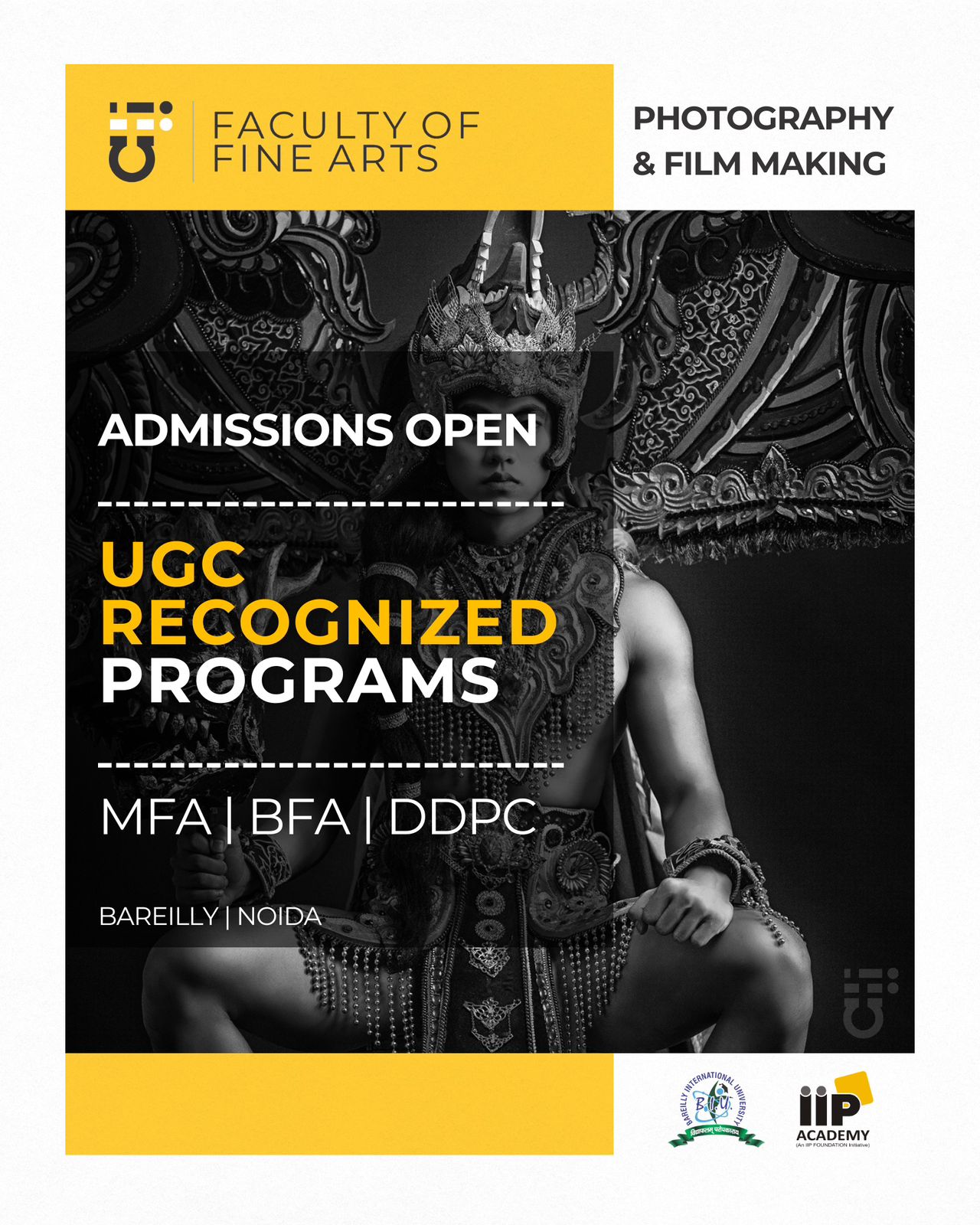
Introduction: A New Chapter in Creative Arts Education
The creative economy in India is expanding rapidly. Photography alone has grown into an industry valued at over ₹10,000 crores, driven by the explosive demand for visual content across e-commerce, digital marketing, media, entertainment, and social platforms. Yet structured, degree-level education in photography and visual arts has remained scarce - with most options concentrated in a handful of metro cities.
That gap is now being addressed in a significant way. The Faculty of Fine Arts at Bareilly International University (BIU) - launched in collaboration with IIP Academy (Indian Institute of Photography) - brings together two institutions with complementary strengths: IIP Academy 16 years of pioneering photography education and BIU's UGC-recognized university infrastructure spread across a 60-acre campus in Bareilly, Uttar Pradesh.
This collaboration offers students something rare in India - the chance to earn a nationally recognized fine arts degree with deep specialization in photography and film making, taught through a practice-based, mentor-driven pedagogy, with the full backing of a multi-faculty university ecosystem.
Whether you are a student who has just cleared 12th standard and wants to pursue a creative career, a graduate looking to specialize through a master's program, or someone seeking a focused diploma in photography - this guide covers everything you need to know about the programs, eligibility, campus, curriculum, career scope, and admission process at the Faculty of Fine Arts, Bareilly.
About the Two Institutions Behind This Collaboration
IIP Academy - Indian Institute of Photography
IIP Academy was founded in 2010 in New Delhi with a clear mission: to make professional photography education accessible, structured, and career-oriented. Over the past 16 years, it has grown into one of India's most recognized names in photography and visual arts education.
Key facts about IIP Academy:
IIP Academy has trained over 32,000 photographers from more than 44 countries since its founding. The academy operates under IIP Foundation, a registered non-profit organization (registered under the Indian Trust Act, 1882) dedicated to promoting cultural and creative arts education. IIP was among the first institutions in India to offer structured online photography courses, starting in 2010. The academy maintains a 100% placement record, with alumni working at organizations including Google, National Geographic, Mercedes, The Times of India, and leading advertising agencies worldwide.
IIP Academy's founder, Rajesh Goyal, brings over 30 years of experience in photography, media, advertising, and cultural documentation, having led creative campaigns for over 100 brands and pioneered photo tourism learning programs in India. The academy follows a distinctive educational philosophy summed up as: Creativity → Confidence → Culture → Career - training students not just in technical skills but in artistic thinking, cultural understanding, and entrepreneurial readiness.
The institution has received multiple recognitions including the Dialogue India Academia Award for Innovation in Photography Education and the National Photography Training Excellence Award.
Bareilly International University (BIU)
Bareilly International University was established in 2016 under the Uttar Pradesh Government Act No. 26 of 2016, in accordance with the UGC Act of 1956. The university is promoted by the Rohilkhand Charitable Educational Trust and has been operational since the 2016-17 academic session.
BIU is recognized by the University Grants Commission (UGC) and holds approvals from multiple regulatory bodies including the Medical Council of India (MCI), Dental Council of India (DCI), and the Pharmacy Council of India (PCI). The university offers programs across more than 10 constituent institutions and 8 academic departments spanning medical sciences, dental sciences, nursing, pharmacy, management, humanities, paramedical sciences, and now fine arts.
The BIU campus is spread across approximately 60 acres along Pilibhit Bye Pass Road in Bareilly. Facilities include ICT-enabled classrooms, a well-stocked central library, multiple auditoriums (including a 900-seat air-cooled auditorium and a 400-seat air-conditioned auditorium), hostels for both men and women, a cafeteria, sports facilities, Wi-Fi connectivity across campus, and banking and healthcare services on-site.
The university's location in Bareilly places it well-connected by road and rail - approximately 250 km from the state capital Lucknow and 256 km from Delhi, making it accessible to students across Uttar Pradesh and neighboring states.
The Faculty of Fine Arts: What Makes This Collaboration Unique
The Faculty of Fine Arts brings IIP Academy specialized pedagogy in photography and visual arts into BIU's established university framework. This means students receive:
A UGC-recognized degree backed by a state-established university, valid for government employment, higher studies, and professional opportunities across India and internationally.
16 years of photography-specific teaching methodology developed by IIP Academy - including mentor-mentee based learning in small batches, practice-based curriculum design, industry integration through live projects, and exposure to cultural documentation and research.
Full university campus infrastructure - including professional photography studios, fine arts studios and galleries, an analogue centre with darkroom and archival facilities, digital editing labs, a library, exhibition spaces, hostel accommodation, and all the support services of a multi-faculty university.
NEP 2020 alignment - programs are structured following the National Education Policy 2020 framework, incorporating credit-based academic progression, multidisciplinary learning options, multiple entry and exit points, and choice-based course selection. Under this system, students earn credits stored digitally through the Academic Bank of Credits (ABC), allowing flexibility and transferability.
International exposure - IIP Academy has a track record of conducting cultural exchange programs with institutions and organizations across countries including China, Serbia, and the SAARC region. Students participate in international workshops, exhibitions, and collaborative projects.
This combination is significant because most standalone photography institutes in India cannot offer UGC-recognized degrees, while most universities that offer fine arts programs lack specialized photography infrastructure, industry-experienced faculty, and the placement networks that IIP Academy has built over 16 years.
Programs Offered at the Faculty of Fine Arts
Certificate in Photography (1 Year)
Duration: 1 year (2 semesters)
Eligibility: Completion of 10+2 (12th standard) from any recognized board in any stream (Arts, Science, Commerce). No specific subject requirements - students from all academic backgrounds are welcome.
What you will study:
The Certificate program is a focused, foundational course designed to equip students with core photography skills in a compact timeframe. The curriculum covers camera techniques and exposure control, composition and visual language, studio lighting and location photography, digital post-processing and editing, introduction to art history and history of photography, genre exploration (portrait, landscape, street, product, documentary photography), portfolio building fundamentals, and business basics of photography.
Under the NEP 2020 framework, this Certificate serves as the first exit point - students who complete the first year earn a recognized credential and can either enter the industry or continue into the Diploma program to build on their foundation.
Who is this for: Students who want a structured introduction to professional photography before committing to a longer program, working professionals exploring a creative career shift, and hobbyists ready to turn their passion into a profession.
Diploma in Photography (2 Years)
Duration: 2 years (4 semesters)
Eligibility: Completion of 10+2 (12th standard) from any recognized board in any stream. Students who have completed the 1-year Certificate program can continue directly into the second year.
What you will study:
The Diploma program builds significantly on the Certificate foundation, adding depth in both technical mastery and conceptual understanding. In addition to advanced camera and lighting techniques, students study fashion and advertising photography, documentary and ethnographic photography, visual storytelling and narrative structure, advanced photo editing and color grading, introduction to film making and cinematography, research methodology, professional practice and entrepreneurship, and complete a substantial portfolio project.
The Diploma represents the second exit point under the NEP 2020 multi-exit framework. Graduates earn a recognized diploma qualification and are prepared for direct entry into the photography industry, or can continue into the BFA for a full degree.
Who is this for: Students seeking a comprehensive, practice-intensive qualification that balances depth with a manageable time commitment. Ideal for those who want to be industry-ready within two years while keeping the option to continue toward a degree.
Bachelor of Fine Arts (BFA) - Photography Specialization (3 Years)
Duration: 3 years (6 semesters) under the NEP 2020 credit-based framework
Eligibility: Completion of 10+2 (12th standard) from any recognized board in any stream (Arts, Science, Commerce). Students who have completed the Certificate or Diploma programs can continue with credit transfer into the appropriate year.
What you will study:
The BFA program provides a comprehensive undergraduate education in photography as a fine art discipline. The curriculum covers everything included in the Certificate and Diploma stages, and adds advanced study in art history and contemporary photographic theory, curatorial and exhibition practice, cultural documentation and research projects, interdisciplinary creative practice combining photography with visual arts and media, advanced studio specialization, professional industry projects, and a capstone portfolio or creative thesis.
The program follows IIP's practice-based pedagogy - students work on real projects from the early semesters, including assignments with media houses, corporate brands, government initiatives, cultural festivals, and NGO programs. Past student projects have included documentation of events like the Kumbh Mela and national youth programs.
As a UGC-recognized bachelor's degree, the BFA is valid for government employment, competitive examinations, and admission to postgraduate programs including the MFA.
Who is this for: Students who want a full undergraduate degree in photography and visual arts - providing both academic credibility and deep professional training for a long-term creative career.
BFA Honours (4 Years)
Duration: 4 years (8 semesters) - includes an additional research year beyond the standard BFA
Eligibility: Completion of 10+2 (12th standard) from any recognized board. Students enrolled in the 3-year BFA can opt to extend into the Honours year based on academic performance and interest.
What you will study:
The BFA Honours program adds a dedicated fourth year focused on independent research, advanced creative practice, and specialization. During this year, students undertake a major independent research project or body of creative work, engage in advanced seminars and critical discourse, pursue deep specialization in a chosen area (such as documentary photography, fine art practice, cinematography, or cultural studies), and may participate in exhibition curation and academic publishing.
The Honours designation significantly strengthens the student's academic profile - and critically, BFA Honours graduates qualify for a fast-track 1-year MFA at the Faculty of Fine Arts, saving a full year compared to the standard 2-year MFA pathway.
Who is this for: Academically ambitious students who want the strongest possible undergraduate qualification, those planning to pursue an MFA or academic career, and students interested in research-driven creative practice.
Master of Fine Arts (MFA)
Duration: 1 year for BFA Honours graduates from the Faculty of Fine Arts | 2 years for candidates holding a 3-year bachelor's degree from any recognized university
Eligibility: A bachelor's degree in any discipline from a recognized university. BFA Honours graduates from the Faculty of Fine Arts enter the accelerated 1-year MFA track. All other graduates with a 3-year bachelor's degree follow the standard 2-year program.
What you will study:
The MFA is an advanced program designed for students seeking deeper specialization and conceptual development. The curriculum goes beyond technical skill-building into photographic theory, curatorial practice, research methodologies, interdisciplinary approaches, advanced studio practice, independent project development, exhibition design, and academic writing. Students undertake a significant independent research project or body of creative work as part of their final assessment.
The 1-year MFA pathway for BFA Honours graduates represents a significant advantage - students who complete the full 4+1 year journey (BFA Honours + MFA) at the Faculty of Fine Arts earn both an undergraduate honours degree and a master's degree in just 5 years, compared to the typical 3+2 = 5 year route at other institutions, but with the added depth of an Honours research year.
Who is this for: BFA Honours graduates seeking rapid postgraduate completion, graduates from other disciplines wanting to specialize in photography as a serious artistic and academic pursuit, aspiring photography educators and researchers, and working professionals looking to deepen their practice.
Teaching Methodology: How Learning Works at the Faculty of Fine Arts
The Faculty of Fine Arts follows a teaching approach that distinguishes it from conventional university programs:
- Mentor-Mentee Learning System: Students are organized into small learning groups guided by experienced faculty. IIP Academy maintains a batch size of approximately 16 students, ensuring personalized attention and one-on-one communication between mentors and learners. This Guru-Shishya inspired model allows faculty to observe each student's growth closely and provide tailored guidance.
- Practice-Based Learning: The curriculum emphasizes doing over theory. From the early stages, students engage in studio work, fieldwork, live assignments, and project-based learning. Technical proficiency is built through hands-on practice rather than classroom lectures alone.
- Industry Integration: Students regularly participate in real-world projects with media houses, corporate brands, government events, cultural organizations, fashion shows, and NGO programs. This provides portfolio-building opportunities and professional exposure before graduation.
- Research and Cultural Documentation: IIP has conducted more than 25 research projects related to Indian history, cultural heritage, craft traditions, and visual documentation of communities. Students participate in these documentation projects as part of their academic experience.
- Interdisciplinary Approach: Programs combine art, technology, culture, and entrepreneurship - reflecting both NEP 2020's emphasis on multidisciplinary education and the realities of modern creative careers that demand versatility.
- Jury Review Sessions: Regular portfolio reviews and critique sessions with mentors help students develop conceptual depth, narrative structure, and technical refinement - building confidence as visual storytellers.
Campus Infrastructure and Facilities
Students at the Faculty of Fine Arts have access to both IIP Academy specialized creative facilities and BIU's broader university infrastructure:
- Photography Studios: Professional studios including master and natural light studios installed with industry-standard equipment. Students work with professional-grade cameras (including medium format systems), flash meters, light modifiers, and a range of DSLR and mirrorless camera systems.
- Analogue Centre and Darkroom: Dedicated facilities for traditional film photography, including darkroom processing and archival printing - an increasingly rare resource in Indian photography education and essential for understanding the full spectrum of photographic practice.
- Fine Arts Studios and Galleries: Dedicated spaces for artistic practice, exhibition curation, and display of student and faculty work.
- Digital Editing Labs: Computer labs equipped with industry-standard editing software for post-processing, color grading, and digital output.
- Library and Research Centre: A comprehensive collection of photography books, art publications, periodicals, journals, and digital resources supporting academic research and creative exploration.
- Hostel Facilities: Separate hostels for men and women with modern amenities, ensuring comfortable accommodation for students coming from other cities and states.
- Additional University Facilities: Wi-Fi campus, cafeteria, sports facilities, auditoriums, banking facilities, healthcare services, and student collaboration spaces.
Career Scope: What Can You Do After Graduating?
Photography and visual arts graduates enter one of the most diverse career landscapes in the creative economy. The demand for skilled visual professionals continues to grow across multiple sectors:
- Commercial and Advertising Photography: Fashion, lifestyle, food, automobile, architecture, real estate, and product photography for brands, agencies, and e-commerce platforms.
- Editorial and Journalism: Photojournalism, documentary photography, editorial shoots for publications, and visual storytelling for media organizations.
- Film and Video Production: Cinematography, direction of photography, video content creation for digital platforms, and production work for film, television, and advertising.
- Fine Art Photography: Exhibition-based practice, gallery representation, art residencies, and participation in national and international art fairs.
- Cultural Documentation: Working with museums, heritage organizations, government cultural programs, and NGOs on documentation and archival projects.
- Education and Research: Teaching photography and visual arts at universities and institutes (particularly with an MFA), conducting academic research, and leading workshops.
- Entrepreneurship: Running independent photography studios, production houses, content creation agencies, and freelance practices.
Admission Process: How to Apply
The admission process is simple and designed to be accessible:
- Step 1: Pre-Register. Fill out the pre-registration form available through the official website or at the counselling centres in Noida and Bareilly. This is your first step to securing a seat.
- Step 2: Connect with the Admissions Department. Once you pre-register, the admissions team will reach out to guide you through the next steps - including a personal interaction or counselling session to discuss your creative interests, career goals, and the right program fit (Certificate, Diploma, BFA, BFA Honours, or MFA).
- Step 3: Follow the Admission Process. The admissions department will walk you through document submission, fee structure, education loan options, hostel booking, and any other steps specific to your chosen program.
- Counselling Centres:
- Bareilly - Bareilly International University, Pilibhit Bye Pass Road, Bareilly
- Noida - IIP Academy campus, Sector 2, Noida (near Delhi)
Education Loan and Financial Assistance
The Faculty of Fine Arts offers education loan assistance for all programs - Certificate, Diploma, BFA, BFA Honours, and MFA - to ensure that financial constraints do not prevent talented students from pursuing creative education. Students enrolling in any program can avail education loans through partnered financial institutions to cover tuition fees, equipment costs (cameras, laptops, editing software), hostel accommodation, and other educational expenses.
Additionally, students from economically weaker sections may benefit from various central and state government scholarship schemes and interest subsidies available for higher education in Uttar Pradesh.
Why Bareilly? The Strategic Advantage of Location
Choosing a creative arts college outside of traditional metro centers like Mumbai or Delhi may seem unconventional - but Bareilly offers several strategic advantages:
Cost of living: Significantly lower than metro cities, making the overall education investment more affordable for students and families. Hostel, food, and daily expenses in Bareilly are a fraction of what they would be in Delhi or Mumbai.
Focused learning environment: A 60-acre university campus in a less congested city provides the space, quiet, and immersive environment conducive to creative work - something difficult to replicate in urban photography institutes operating out of small commercial spaces.
Connectivity: Bareilly is well-connected by rail and road to Delhi (256 km), Lucknow (250 km), and other major cities in Uttar Pradesh and North India. The Bareilly Junction railway station is one of the busiest in the region.
Growing creative hub: As India's creative economy decentralizes away from metros, tier-2 cities are becoming increasingly important centers for content creation, production, and creative enterprise.
Dual-city counselling: Students can explore and get guidance from both the Noida counselling centre (close to Delhi) and the Bareilly campus before making their decision.
Conclusion: Is the Faculty of Fine Arts Right for You?
If you are passionate about photography, visual storytelling, or film making and want a structured academic path that leads to a recognized degree and a professional career - the Faculty of Fine Arts at Bareilly International University offers a compelling proposition.
You get the depth of IIP Academy's 16-year legacy in photography education combined with the academic credibility of a UGC-recognized university, delivered on a 60-acre campus with dedicated studios, a darkroom, galleries, hostel facilities, and full university infrastructure. The curriculum is aligned with NEP 2020, the faculty brings real industry experience, and the placement track record speaks for itself.
This is not about choosing between creativity and credibility. The Faculty of Fine Arts gives you both.
Admissions are open. Seats are limited.
Campus: Bareilly International University, Pilibhit Bye Pass Road, Bareilly, UP
Counselling Centres: Noida | Bareilly
IIP Academy - 16 Years of Trust, Innovation & Creative Excellence
FAQ
Q: What is the Faculty of Fine Arts at Bareilly International University?
A: The Faculty of Fine Arts is a specialized academic division within Bareilly International University (BIU), established in collaboration with IIP Academy (Indian Institute of Photography). It offers UGC-recognized degree and diploma programs in Photography, Visual Arts, and Film Making, combining IIP's 16 years of creative arts teaching experience with BIU's university infrastructure and accreditation.
Q: What is IIP Academy's track record?
A: IIP Academy has been operating since 2010 and has trained over 32,000 photographers from more than 44 countries. The institution maintains a 100% placement record, with alumni working at organizations like Google, National Geographic, Mercedes, The Times of India, and various international media and creative agencies.
