
How IIP Academy Prepares Students for India's Rising Demand for Commercial Photography

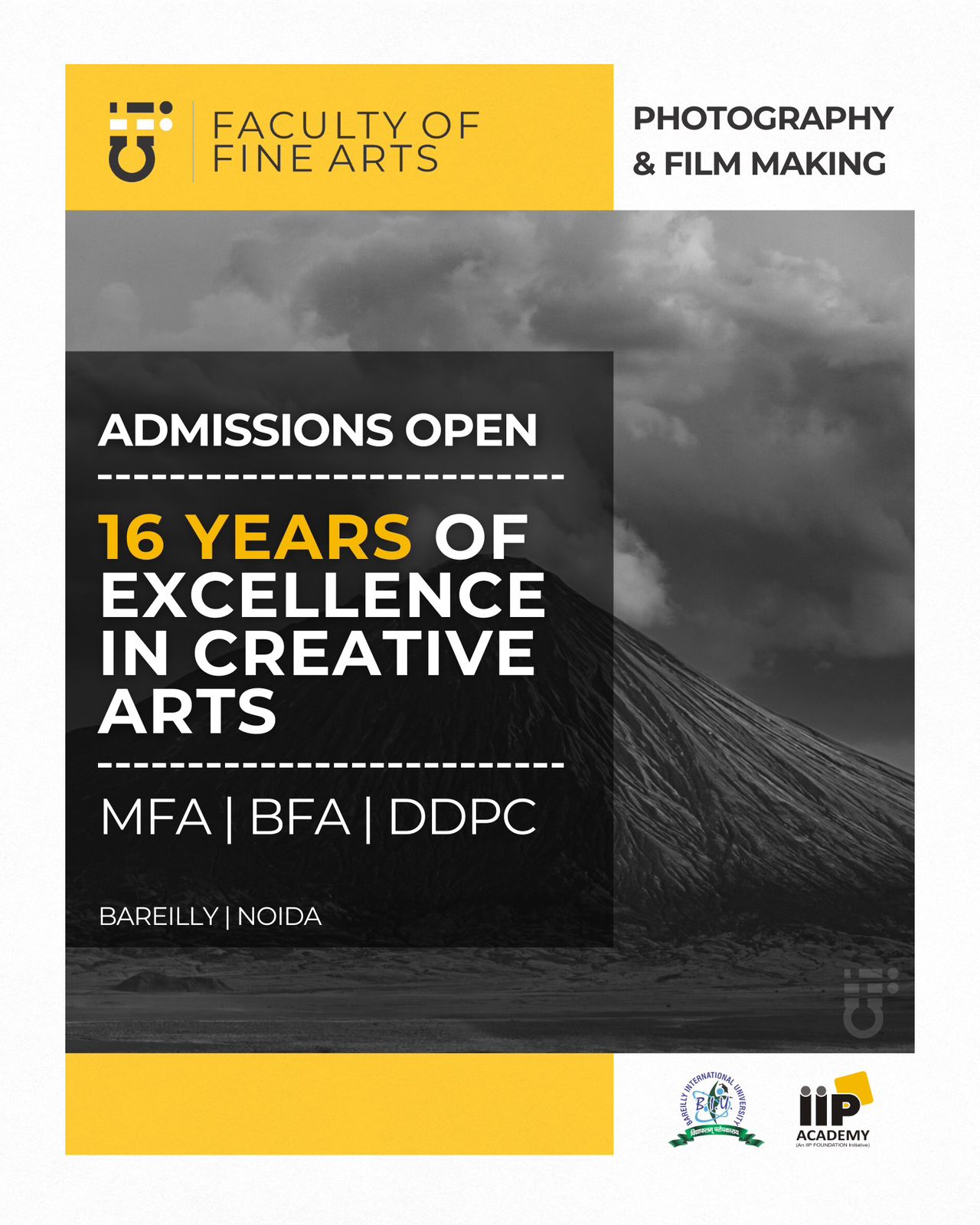
India is in the middle of a visual revolution. From e-commerce giants uploading thousands of product listings every day, to homegrown fashion labels competing on global platforms, the demand for professionally trained commercial photographers has never been more urgent - or more real. For students considering a career in commercial photography, or families weighing a fine arts education for their child, the question is no longer whether this field has a future. The question is: where do you train to become genuinely industry-ready?
The answer, increasingly, is the Indian Institute of Photography - IIP Academy, Noida.
The Market Opportunity Is Real, and It Is Now
The commercial photography sector in India is witnessing an unprecedented boom, driven by the rise of e-commerce, social media, and the expansion of industries like fashion, real estate, and advertising. According to a KPMG report, the Indian media and entertainment industry is expected to grow at a CAGR of 10.5% between 2022 and 2030, with visual content playing a pivotal role. Commercial photography has seen a remarkable 25% year-on-year growth in demand, particularly in urban and semi-urban areas. iipacademy
This is not a niche trend. Every brand that sells online needs a product photographer. Every restaurant that wants customers needs a food photographer. Every real estate developer marketing a new project needs an architectural photographer. Platforms like Instagram, YouTube, and Amazon heavily rely on high-quality visuals, creating a constant demand for skilled professionals.
For students enrolling in photography classes in India today, this convergence of digital commerce and visual communication represents a career runway that simply did not exist a decade ago.
Government Policy Recognises the Creative Economy
It is significant that India's education policy has formally acknowledged what the industry already knew: creative arts education is not supplementary - it is strategic.
The National Education Policy (NEP) 2020, introduced by the Ministry of Education, Government of India, places explicit emphasis on skill-based, interdisciplinary, and outcome-oriented learning. It encourages institutions to move beyond rote academics and build curricula that prepare students for the real economy - including the creative economy. Recognising this growth, India's NEP emphasises fostering creative and interdisciplinary education to prepare students for evolving career landscapes, and institutions like IIP Academy are leading the way, aligning their curriculum with NEP guidelines to bridge the gap between traditional education and industry requirements.
The implications for visual arts students are profound. A BFA in Photography from IIP Academy, offered in collaboration with Bareilly International University (BIU) - a UGC-approved university - is now a fully NEP 2020-aligned, credit-based degree. It carries the academic recognition of a university degree while delivering the industry integration of a professional institute. For students and parents who once worried about whether photography was a real career, this policy alignment removes the last remaining doubt.
As Prime Minister Narendra Modi has articulated in his vision for India's creative industries: India is becoming the creative hub of the world, where art and innovation come together to inspire generations. The government's push for India to become a global creative economy by 2047 - the centenary of independence - places photographers, filmmakers, and visual artists at the very centre of national ambition.
What Commercial Photography Actually Demands
Many students come to photography institutes with technical curiosity - they want to learn lighting, composition, or post-processing. What they often underestimate is that commercial photography is as much a professional discipline as it is an artistic one.
A successful commercial photographer must understand brand communication, client briefs, art direction, and the economics of the visual marketplace. They must be equally at home in a product studio, on a fashion shoot, or delivering architectural photography for a real estate developer. Commercial photographers must understand marketing strategies and brand positioning to deliver effective visuals, and often work with creative teams including art directors, stylists, and marketing professionals.
This is precisely the gap that IIP Academy's curriculum is designed to close.
How IIP Academy Builds Commercial Photographers
Since its founding in 2010, IIP Academy has trained over 33,000 students from more than 40 countries. It is widely regarded as the best photography institute in India for its combination of artistic rigour, industry exposure, and placement outcomes.
Photography is not just an art - it is a science and a business. Mastering all three is the key to success. - Rajesh Goyal, Founder & Chairman, IIP Academy
This philosophy is embedded in every aspect of how IIP Academy teaches. Students are not simply learning to operate a camera. They are learning to think visually, communicate commercially, and operate professionally.
Degree and Diploma Programmes aligned with industry needs include:
- BFA in Photography - 4 years, 8 semesters, 160 credits, covering commercial, conceptual, editorial, and documentary photography
- MFA in Photography - 2 years of advanced practice, research, and specialisation
- Dual Diploma in Photography - A rigorous professional programme combining technical and business learning
The BFA programme, in particular, is structured to give students hands-on experience across every major genre of commercial photography: product, fashion, advertising, food, architectural, corporate, and lifestyle. By the time a student graduates, they have not just a portfolio - they have a professional body of work built through real assignments.
The IIP Academy Difference: Mentorship, Industry, and Real-World Practice
What separates IIP Academy from other photography institutes in India is its Guru-Shishya philosophy - a mentorship model rooted in India's ancient traditions of Nalanda and Takshashila, adapted for a modern creative economy.
Students at IIP Academy work directly with experienced professionals, not just classrooms. They have documented live events, shot for real brands, collaborated with fashion houses, and been placed with media organisations, advertising agencies, and corporate communications teams. IIP's placement record stands at 100% - not as a statistic, but as a track record built over fifteen years.
The infrastructure supports this ambition: professional photography studios, digital editing labs, an analog darkroom, a library and research centre, an exhibition gallery, and mentor consultation rooms are all part of the learning environment at IIP Academy Noida campus. The academy's robust placement record and industry connections set a benchmark for excellence, making it the top photography institute in Noida for students aspiring to thrive in commercial photography.
Graduates of IIP Academy have gone on to work with organisations such as Google, National Geographic, Mercedes, Harley-Davidson, and The Times of India - a testament to what structured, industry-integrated education in photography can deliver.
A Career That India Needs You to Choose
The rise of India's digital economy has created a structural demand for visual professionals that will only deepen over the coming decade. India's fashion industry is growing at an annual rate of 10-12%, driving demand for fashion photographers, while advertising industry growth of 11% annually is creating sustained need for commercial imagery across digital and traditional media.
Students who invest in serious photography classes in India today - at an institution that combines artistic depth with professional preparation - are positioning themselves at the intersection of culture, commerce, and creativity. That is a powerful place to stand.
