
Types of Photography Courses in India: How to Choose the Right Course for Your Career

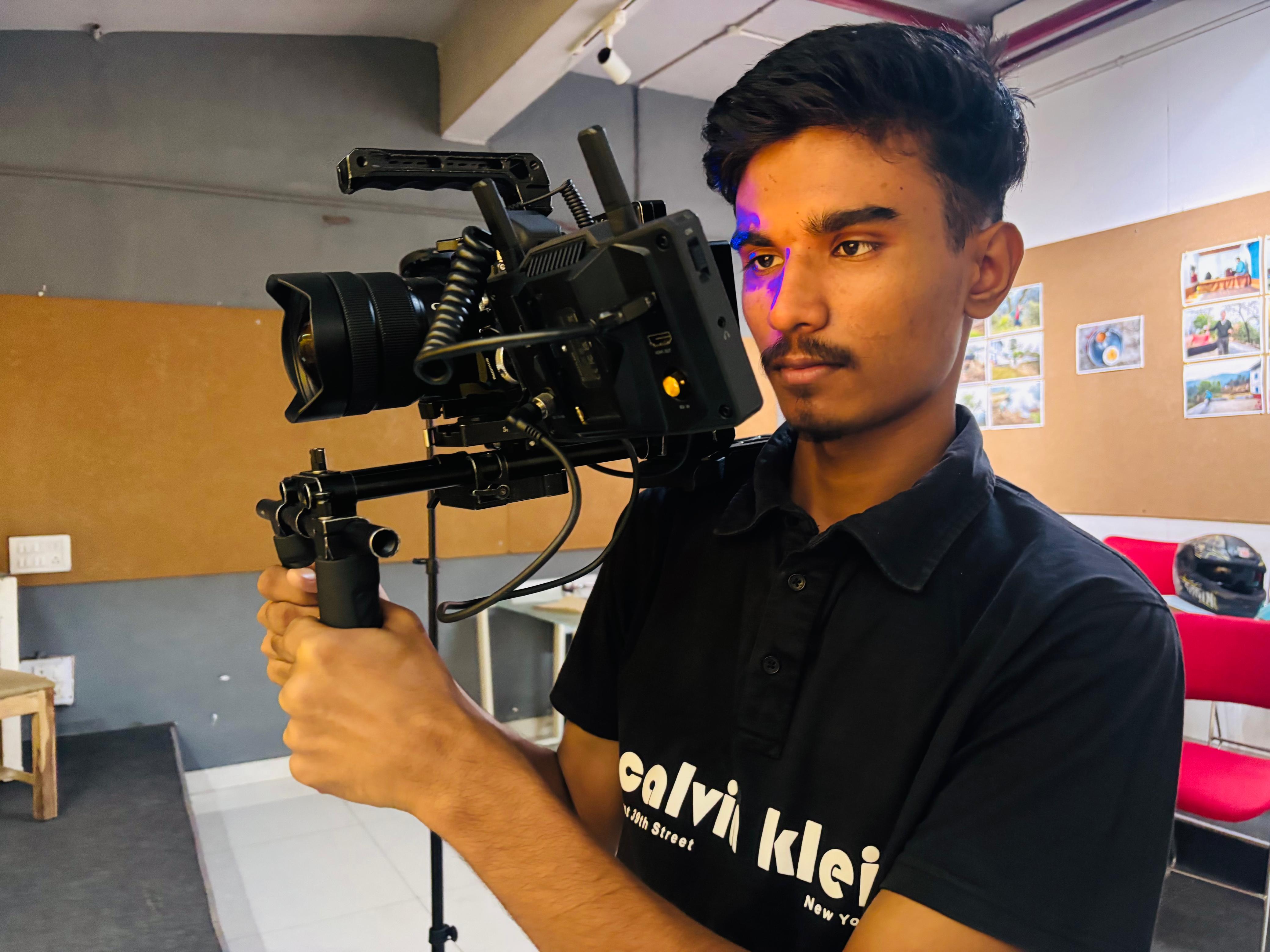
Photography has evolved from being a specialised artistic pursuit into an important part of India's growing creative economy. Professional photographers now work across advertising, e-commerce, fashion, journalism, cinema, tourism, architecture, real estate, weddings, cultural documentation and digital content creation.
This expanding scope is supported by the larger growth of visual media. According to the FICCI–EY Media and Entertainment Report, India's media and entertainment sector reached approximately ₹2.78 trillion in 2025. Digital advertising alone grew by 26% to ₹947 billion and accounted for 63% of total advertising revenue. This growth is increasing the demand for professionals who can create commercially effective, technically refined and visually original content.
However, not every photography course prepares students for the same career. Some courses teach basic camera operations, while others offer structured education in visual studies, art history, research, commercial practice, technology and professional portfolio development.
Understanding the different types of photography courses is therefore essential before selecting a programme.
Why Study Photography Through a Professional Course?
A camera can be learned through online tutorials, but a photography career requires much more than knowing aperture, shutter speed and ISO.
Professional photography involves understanding:
- Light, composition and colour
- Visual communication and storytelling
- Art, aesthetics and photographic history
- Studio and outdoor production
- Image editing and digital workflow
- Research and concept development
- Client briefs, budgets and deadlines
- Copyright, licensing and professional ethics
- Portfolio presentation and business development
A structured photography course gives students regular assignments, guided practice, faculty critique, peer learning and exposure to real professional situations. These elements are difficult to achieve through isolated tutorials.
India's National Education Policy 2020 also encourages multidisciplinary undergraduate education, vocational integration, flexible curricula, internships and experiential learning. This has created stronger academic pathways for students interested in creative professions such as photography, filmmaking, design and visual arts.
Major Types of Photography Courses in India
The main photography courses in India can be divided into six categories. The right option depends on the student's age, existing qualifications, career objective and available time.
Short-Term and Foundation Photography Courses
Short-term Photography courses generally range from a few days to several months. They are designed for beginners who want to understand their cameras or explore photography before committing to a longer programme. These courses are suitable for hobbyists, travellers, entrepreneurs, social media creators and students who are still exploring their interest.
However, a short course is usually not sufficient for someone seeking a complete professional career. It may improve technical confidence, but it rarely offers the sustained mentorship, research, portfolio depth and industry exposure required for long-term professional development.
Online Photography Courses
Online photography courses offer flexibility to students who cannot attend regular classes. They may be live, recorded or delivered through a combination of video lessons, assignments and mentor reviews.
A strong online programme can help students learn camera techniques, composition, visual storytelling and post-production from any location. IIP Academy, for example, has offered structured online photography education since 2010 and currently provides foundation and online learning pathways for beginners and enthusiasts.
The quality of an online course depends heavily on the level of interaction. Students should look for programmes that provide assignment reviews, faculty feedback and opportunities to discuss their photographs. A recorded course without critique may transfer information, but it may not significantly improve the student's visual thinking.
Specialised Photography Courses
Specialised courses focus on a particular genre or commercial field. Popular specialisations include:
- Fashion photography
- Product and advertising photography
- Food photography
- Wedding photography
- Wildlife photography
- Travel photography
- Documentary photography
- Architectural and interior photography
- Photojournalism
- Fine art photography
These courses can be useful when a photographer already understands the fundamentals and wants to build expertise in a particular sector.
For example, fashion photography requires knowledge of studio lighting, styling, beauty, art direction and working with models. Product photography demands control over reflections, surfaces, colour accuracy and brand communication. Documentary photography requires patience, research, ethics and the ability to construct meaningful visual narratives.
At IIP Academy, specialised learning is connected to four broad photographic practices: commercial, conceptual, editorial and documentary photography. These disciplines help students understand that photography may serve a client, express an idea, communicate through media or document society and culture.
Diploma in Photography
A professional diploma in Photography offers more extensive education than a short-term certificate. Diploma programmes may range from one to two years, depending on the institution and academic structure.
Diploma courses are usually practical and career-focused. They can help students enter the industry faster than a full undergraduate degree.
However, students must examine the academic status of the diploma. Some institutes provide independent certificates, while others offer university-associated or academically structured programmes. The value of the course depends not only on its name but also on its curriculum, faculty, infrastructure, industry engagement and student outcomes.
IIP Academy current professional pathway includes a mentor-led Dual Diploma in Photography combining technical proficiency with commercial, editorial and documentary practice.
Bachelor of Fine Arts in Photography
For students asking which photography course is best after 12th, a Bachelor of Fine Arts in Photography is generally the most comprehensive option for building a long-term professional career.
A BFA goes beyond camera training. It develops the student as a visual artist, researcher, communicator and professional practitioner.
The BFA Photography programme offered through IIP Academy and Bareilly International University is currently structured as a four-year, eight-semester programme carrying 160 credits. It covers the art, science and business of photography, from analog darkroom practice and cultural documentation to digital post-production and commercial work.
A degree is especially valuable for students who may later pursue postgraduate studies, research, teaching, curation, institutional work or creative leadership roles. It also gives young students time to experiment with different genres before deciding on a specialisation.
Master of Fine Arts in Photography
An MFA in Photography is an advanced postgraduate programme for graduates who want to develop an independent artistic, academic or research-based practice.
IIP Academy's MFA Photography programme is structured as a two-year, four-semester research-driven course. It is intended for photographers seeking deeper engagement with conceptual frameworks, cultural scholarship and curatorial practice.
An MFA can support careers in higher education, cultural research, gallery practice, curatorship, visual archives, documentary projects and senior creative roles.
Which Photography Course Is Best After 12th?
There is no single answer for every student. The right decision depends on the seriousness of the career goal.
Choose a short-term course when you want to explore photography before making a major commitment.
Choose an online course when flexibility is the primary requirement.
Choose a diploma when you want intensive, practical training and relatively faster industry entry.
Choose a BFA in Photography when you want a complete undergraduate education, wider career options, academic credibility and sufficient time to develop a strong creative identity.
For most students who have completed Class 12 and are confident about pursuing photography professionally, a BFA is the strongest long-term pathway. Students who need a shorter, employment-oriented route may consider a professionally structured diploma.
How to Evaluate a Photography Institute
The course title alone does not establish quality. Before taking admission, students and parents should investigate the following factors.
- Curriculum Depth Check whether the programme teaches only camera techniques or also includes visual culture, research, storytelling, art history, professional practice and portfolio development.
- Faculty and Mentorship Photography improves through regular critique. Look for mentors who can examine a student's work, question their decisions and help them develop an individual visual language.
- Infrastructure A professional institute should provide studios, lighting equipment, editing laboratories, libraries and exhibition facilities. Access to analog darkrooms can also help students understand the historical and material foundations of photography.
IIP Academy current facilities include professional photography studios, an analog darkroom, digital editing laboratories, art studios, an exhibition gallery, a research library and screening spaces across its Noida learning ecosystem. - Industry ExposureStudents should receive opportunities to work on real assignments, internships, exhibitions, publications and professional briefs. A portfolio created through practical work carries more value than a collection of classroom exercises.
- Placement and Alumni Outcomes Ask where graduates are working and what kind of roles they have secured. IIP Academy reports that it has trained more than 33,000 students from over 40 countries and maintains a 100% placement record for eligible professional students. These figures should be considered alongside the institute's alumni work, portfolios and documented professional outcomes.
Statement from IIP Founder Director Rajesh Goyal
According to Rajesh Goyal, Founder Director of IIP Academy:
Photography is not just about learning how to use a camera it's about developing a vision and turning creativity into a meaningful career.
His educational philosophy highlights an important distinction. Camera knowledge makes a person technically capable, but vision, cultural understanding, discipline and professional awareness transform that capability into a sustainable career.
Final Decision: Choose a Career Path, Not Merely a Course
The best photography course is not necessarily the shortest, most expensive or most heavily advertised programme. It is the course that matches the student's career objective and provides the right combination of technical learning, artistic development, research, mentorship and professional exposure.
A hobbyist may need a foundation course. A working professional may benefit from online or specialised training. A student seeking fast-track professional preparation may choose a diploma. A Class 12 graduate planning a lifelong career should seriously consider a BFA, while an experienced graduate seeking advanced artistic or academic development may progress to an MFA.
Before enrolling in any of the available photography courses in India, students should visit the campus, review the complete curriculum, examine student portfolios, meet faculty members and understand the academic recognition of the qualification.
Photography is ultimately not only about producing attractive images. It is about observing carefully, understanding people and cultures, communicating ideas and creating visual work that carries meaning. The right course should therefore teach a student not only how to operate a camera, but how to think, research, create and build a responsible professional career.
