Bachelor in Fine Arts - Painting
COURSE OVERVIEW
The Liberal Arts program at the institute has a threefold mission. It provides you with a strong general education, offers possibilities for focused study, and deepens and enriches your art and design practice. In Liberal Arts classes, you will articulate your ideas with independence and confidence. You will learn to think creatively, critically, and analytically, and develop a lifelong curiosity about the world, inspiring you to create meaningful and thought-provoking works of art.
In the first year, you will take the Foundation program's core curriculum, along with required courses in art history and liberal arts, setting the foundation for your artistic journey. In the second year, you will continue with your required art history and general education coursework while taking more focused courses in your chosen area of emphasis, such as painting, drawing, printmaking, sculpture, or integrated practices, allowing you to specialize and hone your skills. Additionally, you will attend departmental sessions that explore social, historical, and critical issues in contemporary art, providing a well-rounded artistic education.
You may also pursue elective credits to take courses of your choice, pursue a minor in a second field or discipline, or gain internship experience, allowing you to further explore your artistic interests. In the third year, you will focus on developing a self-directed body of work for your thesis exhibition in the sixth semester. Departmental courses in professional practice will guide you in preparing your portfolio and making a realistic plan for sustaining your career after graduation by approaching funders, galleries, residency opportunities, and employers, empowering you to achieve your artistic goals.
Additional Information
Maximum Seats
 |
Eligibility
| 12th Class pass Certificate in any stream. Admission is on a first-come-first-served basis. |
Class Days & Batch Timings
| Monday to Friday 9:30am to 4:30pm |
Course Fee
| Total Fee | Rs. 9,60,000/- |
- Other scholarships are available as per eligibilities and grant bases, to be discussed while interview with directors.
- Guest lectures, masterclasses, workshops, special events and 2 Educational tours, are mandatory and included in the programme fee.
Drawing & Visual Thinking
Observational drawing, figure study, anatomy, perspective, composition - the foundational skill that separates trained artists from software operators. Runs across all four years.
Professional Practice & Entrepreneurship
Portfolio development, client management, pricing creative work, freelancing, grant writing, studio management, intellectual property - career readiness from Day 1.
Art History & Indian Design Heritage
From Mughal miniatures and Warli art to Bollywood poster art and Indian vernacular signage - a deep cultural grounding that gives you a distinctive voice in the global market.
Fundamentals of Visual Art
Elements of Visual Language. Principles of Composition. Observation and Representation. Visual Storytelling and Concept Development.
Painting Traditions
Indian Painting Traditions. Classical and Folk Art Practices. Global Painting Traditions. Traditional Materials and Techniques. Continuity and Transformation of Traditions.
Art & Technology
Digital Tools for Artistic Practice. Photography and Visual Reference Creation. Integrate traditional painting techniques with digital media. Technology for Artistic Communication and Dissemination.
Art Business & Entrepreneurship
Art Marketing and Branding. Entrepreneurship and Creative Enterprise. Intellectual Property and Professional Ethics.
Contemporary Media integration
Expanded Approaches to Painting. Conceptual and Contextual Art Practices. Digital and Interactive Media Applications.
AI-Assisted Design & Emerging Tech
Generative imagery, prompt-based design, automated layouts, AR for branding and future-ready creative workflows.
The Curriculum
Semester 1
- Fundamentals of Visual Arts: Introduction to the basic principles of design, color theory, and composition. Students engage in hands-on projects to understand visualbalance, harmony, and the effective use of color in art.
- Drawing I: Focus on observational drawing techniques, understanding form, perspective, and proportion. Exercises includ
- Art History I: Survey of art from ancient to medieval periods, emphasizing cultural contexts and the evolution of artistic styles. Discussions cover significant artworks and their impact on society.
- Introduction to Digital Media: Basics of digital tools and software relevant to visual arts. Students learn to navigate digital interfaces, utilize graphic tablets, and explore basic digital illustration techniques.
- Liberal Arts Elective: Courses designed to enhance critical thinking and communication skills, such as literature, philosophy, or psychology.
Semester 3
- Painting II: Development of personal style and thematic exploration in painting. Students experiment with various mediums and techniques to express individual artistic visions.
- Digital Painting I: Techniques and tools for creating artwork digitally. Coursework includes mastering software like Adobe Photoshop and Corel Painter, focusing on digital brushwork and layering.
- Printmaking: Introduction to various printmaking processes and their artistic applications. Techniques such as etching, lithography, and screen printing are explored, allowing students to produce original prints.
- Art History III: Study of contemporary art movements and their influences. Discussions on postmodernism, abstract expressionism, and the role of technology in art.
- Elective: Choice of course to complement artistic development, such as sculpture, photography, or graphic design.
Semester 2
- Drawing II: Advanced techniques, including figure drawing and anatomy studies.Students work with live models to capture human anatomy accurately, exploring gesturedrawing and dynamic poses.
- Painting I: Introduction to painting mediums, materials, and techniques. Emphasis on watercolor and acrylics, with projects focusing on still life and landscape compositions
- Art History II: Exploration of art from the Renaissance to the modern era. Analysis of artistic movements, their pioneers, and their influence on contemporary art.
- Digital Imaging: Fundamentals of digital photography and image editing. Students learn to operate digital cameras, understand lighting, and utilize software for image enhancement and manipulation.
- Liberal Arts Elective: Continuation of courses to broaden intellectual perspectives, such as sociology, anthropology, or creative writing.
Semester 4
- Advanced Painting: Experimentation with mixed media and large-scale works. Projects encourage combining traditional painting with unconventional materials to create multidimensional art pieces.
- Digital Painting II: Advanced digital techniques, including 3D modeling and animation basics. Students explore software like Blender or Maya, integrating 3D elements into their digital artworks.
- Sculpture: Understanding three-dimensional forms and materials. Hands-on projects with clay, wood, and metal to create sculptures that complement painting practices.
- Art Criticism and Theory: Developing skills to analyze and critique artworks. Students engage in discussions and write critiques, learning to articulate their interpretations and judgments effectively.
- Elective: Further exploration in a chosen area to enhance skill set, such as interactive media, textile arts, or advanced photography.
Semester 5
- Professional Practices in Art: Preparing for a career in the arts, including portfolio development and exhibition planning. Topics cover art marketing, networking, and understanding the business aspects of the art world.
- Interdisciplinary Studio: Collaborative projects that integrate multiple art forms and media. Students work in teams to create cohesive projects, blending painting with other disciplines like music, dance, or digital arts.
- Art and Technology: Exploration of emerging technologies in art, such as virtual reality and interactive media. Students experiment with VR painting tools and create interactive installations.
- Elective: Course to deepen knowledge in a specific area of interest, such as art therapy, curatorial studies, or advanced digital media.
- Thesis Proposal Development: Guided preparation for the final thesis project. Students research, plan, and present their proposed projects, receiving feedback to refine their concepts.
Semester 6
- Thesis Project: Creation and presentation of a cohesive body of work for public exhibition. This capstone project showcases the student's artistic growth, technical skills, and conceptual depth.
- Art Business and Entrepreneurship: Understanding the art market, gallery relations, and self-promotion strategies. Coursework includes developing business plans, learning about art law, and exploring funding opportunities for artists.
- Elective: Final course to complete the academic and artistic training, potentially focusing on areas like art education, advanced sculpture, or multimedia installations.
- Portfolio Refinement: Finalization of a professional portfolio showcasing a range of skills and works. Students receive guidance on documenting their art, creating an online presence, and preparing for job applications or gallery submissions.
Semester 7
- Major Project I: Research-driven studio practice focused on concept development, experimentation, and the refinement of an individual artistic vision.
- Exhibition Planning and Curation: Introduction to exhibition design, curatorial practices, catalog development, and professional presentation strategies.
- Contemporary Media Integration: Exploration of hybrid and interactive media, digital technologies, and innovative approaches to contemporary visual art.
- Research and Critical Studies: Engagement with global contemporary art practices, art criticism, academic writing, and interdisciplinary elective studies.
Semester 8
- Final Major Studio Project: Creation of a cohesive body of work that demonstrates artistic maturity, technical excellence, and independent research.
- Degree Exhibition: Planning, installation, and public presentation of artwork, providing hands-on experience in exhibition management and professional practice.
- Professional Portfolio Development: Preparation of comprehensive digital and physical portfolios, including documentation, artist statements, CVs, and biographies.
- Dissertation and Career Development: Completion of original research, viva voce presentation, and training in art entrepreneurship, career planning, funding opportunities, and professional advancement in the creative industries.
Course Outcomes
- The Bachelor of Fine Arts (Painting) program is designed to develop students into confident visual artists with a strong understanding of design principles, artistic concepts, media exploration, and contemporary creative practices. Students gain comprehensive knowledge of the traditions, conventions, and evolution of painting while developing their own artistic voice through experimentation, research, and critical inquiry.
- The program equips learners with the technical, conceptual, and professional skills required to transform ideas into meaningful works of art. Through rigorous studio practice, exposure to historical and contemporary art movements, and engagement with diverse materials and techniques, students learn to create original works that communicate with purpose and aesthetic clarity.
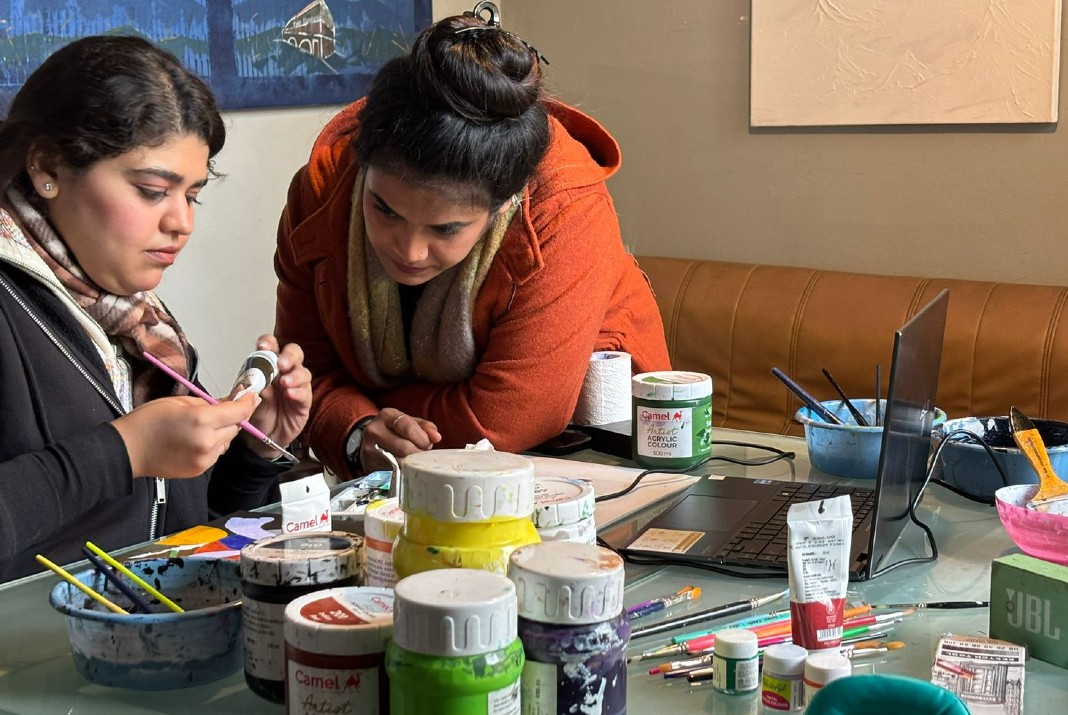
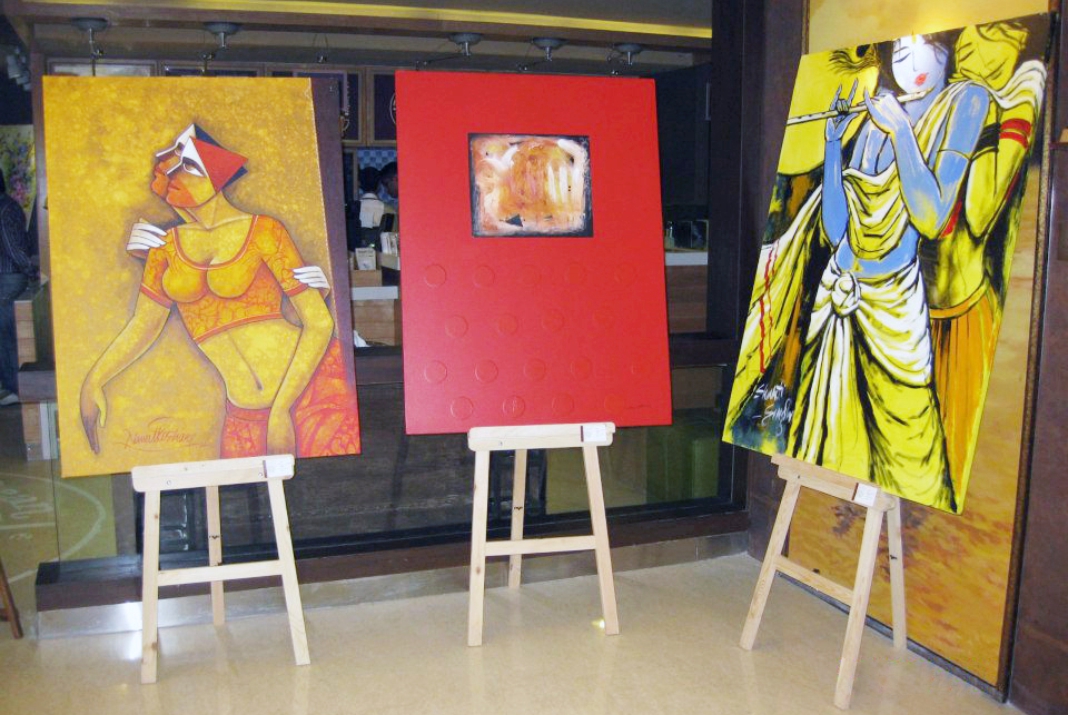
- Beyond studio learning, students are regularly exposed to the wider art ecosystem through exhibitions, galleries, artist interactions, workshops, cultural explorations, art fairs, and industry engagements. At IIP, learning extends beyond the classroom, placing students at the centre of the artistic fraternity where networking, collaboration, and professional relationship-building become an integral part of their growth.
- A distinctive feature of the program is IIP's mentor–mentee based teaching pedagogy, where students receive personalized guidance and continuous handholding from experienced artists, educators, and industry professionals. This approach nurtures confidence, creative discipline, professional ethics, and career readiness.
- Upon completion of the program, students will be capable of working independently as practicing artists, creative entrepreneurs, educators, researchers, curators, or professionals within the creative industries. The culmination of their learning journey is reflected through a professionally curated body of original work presented in a final exhibition, demonstrating artistic maturity, conceptual depth, and readiness for the professional art world.
Academic Qualifications:
Bachelor: BFA in Applied Art, College of Art, Delhi (1994)
Postgraduate: Master of Fine Arts (MFA) - Painting
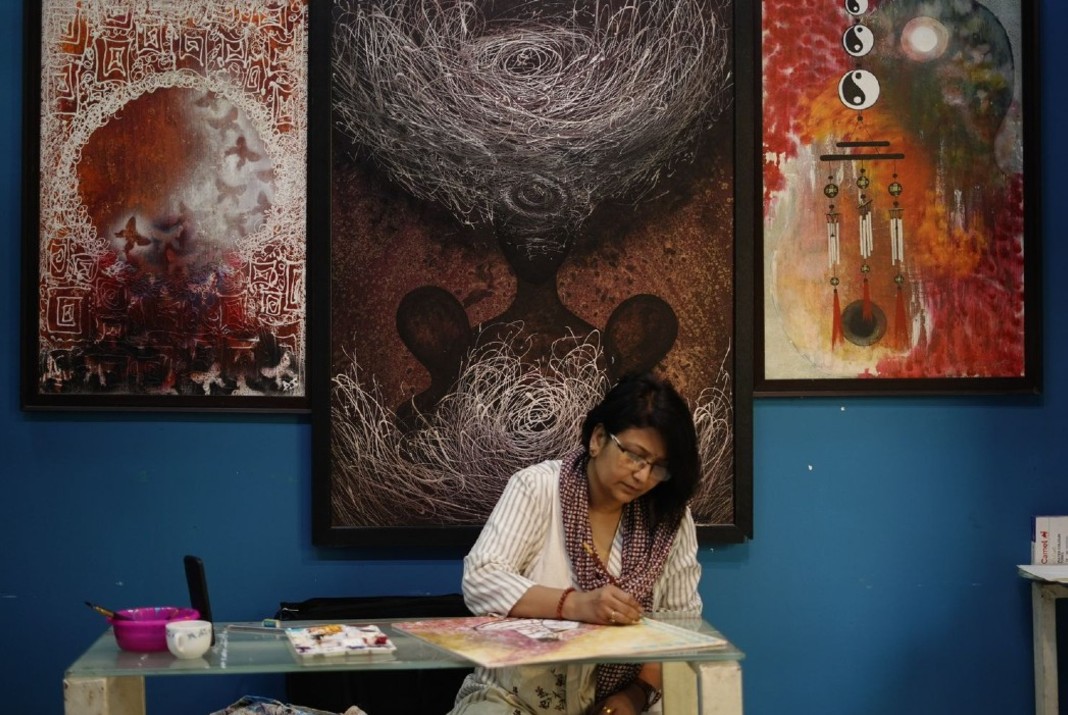
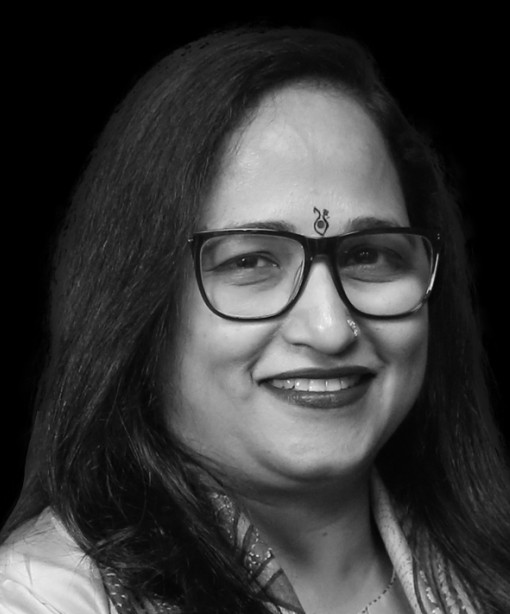
Professional Experience: Ms. Goyal serves as Principal and Chair, Faculty of Fine Arts, Bareilly International University. An alumna of the prestigious College of Art, Delhi, she brings a rich understanding of artistic traditions, studio practice, and contemporary art education. Her interdisciplinary background, spanning Applied Art and Painting, lends a distinctive depth to her approach to painting education.
Under her leadership, the programme emphasizes technical foundations, visual research, conceptual development, and experimentation across traditional and contemporary media. Ms. Goyal actively promotes exhibitions, workshops, artist interactions, and international cultural collaborations that broaden students’ artistic horizons.
The BFA Painting programme is envisioned as a vibrant platform where students develop their artistic voice, technical mastery, and conceptual depth, preparing them for careers as professional artists, educators, researchers, and cultural practitioners.
