
Fine Arts Course Fees in India: UG & PG Fee Details, Duration, Eligibility and Career Scope

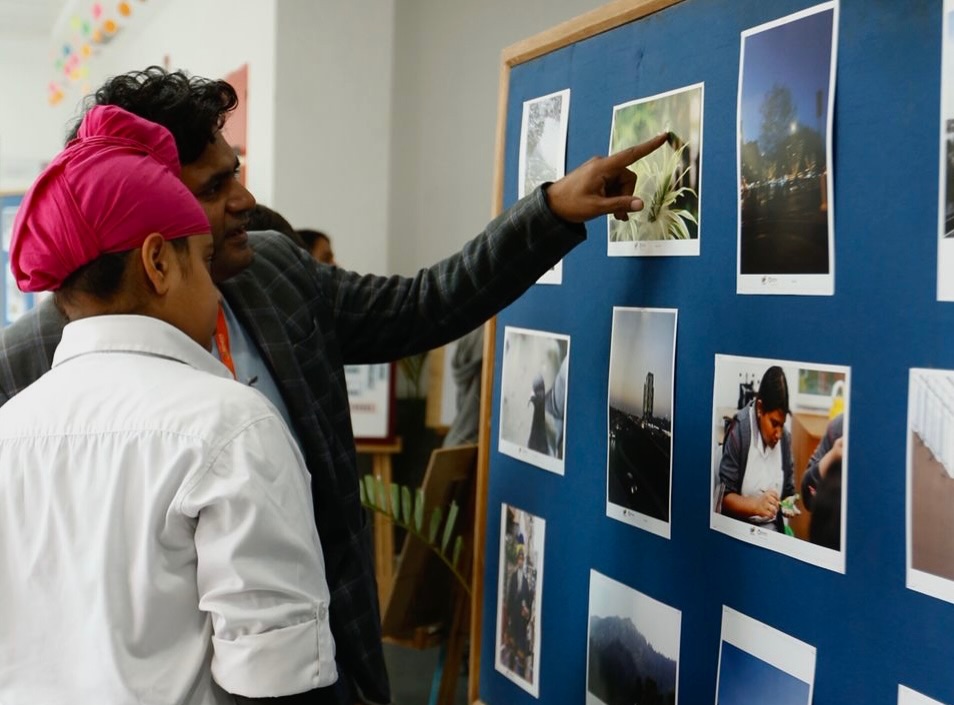
Fine arts is one of the most inspiring and expressive fields of education. It allows individuals to transform creativity into meaningful visual expression through mediums such as painting, drawing, sculpture, photography and digital art. In today's creative economy, fine arts education is not only about artistic expression but also about building professional careers in industries like design, media, entertainment, advertising, and visual communication.
For students who want to pursue a creative career, enrolling in a Fine Arts course at IIP Academy can be a valuable step toward developing professional artistic skills. With structured learning, practical studio training, and guidance from experienced mentors, students can turn their artistic passion into a successful profession.
Choosing a creative career in today's India is no longer a risky or uncertain decision. The market has changed, industries have evolved, and visual culture now influences almost every professional sector. From advertising and filmmaking to digital media, photography, documentation, fashion, publishing, curation, and brand storytelling, the value of trained creative professionals is rising steadily. This is exactly why interest in a fine arts course in India has grown so strongly among students after class 10, class 12, and even graduation. For many aspiring artists, photographers, painters, and visual thinkers, the real question is no longer whether fine arts can become a career. The real question is which course to choose, how much it costs, how long it takes, what the eligibility is, and which institution can actually prepare them for the future.
Fine arts education in India is becoming more professional and future-focused
Fine arts education in India has gone far beyond the old perception of being limited only to painting or sketching. Today, it includes photography, visual culture, filmmaking, applied arts, sculpture, photography, digital arts, media-based image making, curation, and interdisciplinary creative practice. This change is not accidental. It reflects the larger shift happening in society, where images, visual communication, and cultural storytelling have become central to how brands, governments, institutions, and people communicate. The creative economy now plays a serious role in employment generation, cultural preservation, and innovation-led growth. In one of the institutional profiles available in the uploaded material, it is noted that India's creative economy accounted for exports of goods and services worth $121 billion in 2019, while the creative sector is described as one of the largest employment-generating sectors in the country.
That matters because students and parents often look at fine arts emotionally, but they should also look at it economically. A good fine arts education today is not just about artistic satisfaction. It is about building creative capability for industries that rely on visual skill, originality, cultural intelligence, and professional execution.
Fine arts programs in India are available at diploma, undergraduate, and postgraduate levels
Students in India can enter fine arts education at different stages depending on their academic background and seriousness of intent. Some begin with certificate or diploma-level programs after class 10 or class 12, while others directly enter undergraduate degree programs such as the Bachelor of Fine Arts. Those who want deeper specialization, research, or advanced studio practice move toward a Master of Fine Arts after graduation.
Diploma-level programs are usually designed for early skill development and practical training. These are useful for students who want to begin learning quickly, especially in fields like photography, painting, or visual storytelling. Undergraduate programs are broader and more rigorous. A BFA is meant for students who want formal academic and studio-based training over several years. Postgraduate programs such as the MFA are more concept-driven, research-oriented, and professionally mature. These programs are suitable for students who want to deepen their practice, teach, curate, exhibit, or work at a higher level in the creative industries.
Eligibility for fine arts courses in India depends on the level of study
One of the most searched questions by students is about fine arts course eligibility. The answer is straightforward. For diploma or skill-based programs, institutions often accept students after class 10 or class 12, depending on the course structure. These programs are usually more flexible and are ideal for students who want to begin hands-on learning without waiting for a full degree route.
For undergraduate programs such as BFA, the basic eligibility is generally class 12 pass from a recognized board. In some colleges and universities, a portfolio, aptitude test, or interview may also be part of the admission process. The important point is that students from any stream Arts, Commerce, or Science can enter fine arts if they have interest, discipline, and creative aptitude.
For postgraduate programs such as MFA, the standard requirement is a relevant undergraduate degree, often BFA or another related creative qualification. Some institutions also look for a portfolio, research orientation, or interview performance. At the PG level, the student is expected to be more serious, more conceptually aware, and more committed to a professional or academic journey in the arts.
Duration of UG and PG fine arts programs is designed for progressive skill and conceptual development
The duration of a fine arts program depends on its level. Diploma programs are generally shorter and may run for one year or two years. These are often practical in nature and focused on skill acquisition. Undergraduate programs such as the BFA usually run for four years. Postgraduate programs such as MFA generally run for two years.
This structure makes sense. Creative maturity cannot be built overnight. A serious artist, photographer, or visual thinker needs time to develop not only technical ability but also observation, concept, criticism, research discipline, and presentation. That is why the best institutions do not merely teach tools. They build vision over time.
This long-form educational approach also aligns with the broader direction of the National Education Policy 2020, which emphasizes multidisciplinary learning, flexibility, creativity, conceptual understanding, and the integration of arts into mainstream education. The policy clearly argues against rigid separations between arts and sciences and calls for holistic, inquiry-driven, experiential learning.
For students considering a fine arts institute in India, this is important because it signals that creative education is no longer peripheral. It is now part of the mainstream academic future of the country.
Fine arts course fees in India vary widely depending on institution, infrastructure, and specialization
Now comes the practical part. Students and families want clarity on money. Fine arts course fees in India are not uniform. They vary significantly depending on whether the institution is government-run, university-affiliated, or privately managed. Government colleges may offer lower fees, but seats are limited and competition is intense. Private institutions may charge more, but they often offer specialized infrastructure, focused mentoring, studio exposure, and stronger professional orientation.
Based on the uploaded fee document available in this conversation, the fee for a Master of Fine Arts (MFA) - Photography is listed as ₹5,10,000 for regular in-person study, while MFA - Painting is also listed at ₹5,10,000 for the regular format.
For undergraduate study, the Bachelor of Fine Arts (BFA) - Photography, BFA - Filmmaking, and BFA - Painting are each listed at ₹7,55,000 for the regular mode.
These figures are useful because they reflect the price band of structured private-sector fine arts education with specialization.
For diploma-level learning, the same fee document lists the Dual Diploma in Photography (DDPC) at ₹2,55,000 in regular mode, while the Diploma in Painting is listed at ₹1,85,000.
That gives a realistic view of how fees may differ depending on the depth, duration, and specialization of the program.
Government and private fine arts colleges offer very different educational experiences
This is where students often make mistakes. They compare only fees and not value. A lower fee does not automatically mean better education, and a higher fee does not automatically mean stronger outcomes. The real issue is what the student receives in return. A strong fine arts institute in India should offer more than classrooms. It should provide access to studios, gallery exposure, critique culture, faculty mentorship, live projects, archive-based learning, exhibitions, field visits, and serious visual dialogue.
The institutional material uploaded in this conversation repeatedly points toward the larger opportunity in India: there are quality government institutions, but the number of seats is limited, while many private institutions compromise on quality. That is the truth of the market. The serious gap in India is not just more institutions. It is a better institution.
Why Choose IIP Academy for Fine Arts?
IIP Academy is known for its strong focus on creative education and professional training.
Key advantages include:
- Practical studio-based learning
- Experienced faculty and international mentors
- State-of-the-art art studios and facilities
- Portfolio development and exhibitions
- Industry exposure and networking opportunities
The institute has built a reputation over more than 15 years of visual arts & fine arts education, offering programs that combine creativity with technical mastery.
The best fine arts college in India is not just about reputation, but about direction
A lot of students search for the best fine arts college in India, but that phrase is often misunderstood. The best college for one student may not be the best for another. Some students need a research-oriented institution. Some need photography specialization. Some need a broader visual culture environment. Some need stronger academic credentials. Others need a more industry-facing setup.
So the right way to judge a college is through a few hard filters. Does it have experienced faculty? Does it understand current and future creative industries? Does it have serious infrastructure? Does it encourage conceptual growth and not just software learning? Does it build a portfolio? Does it prepare students for employment, entrepreneurship, or higher study? Does it have a culture of discipline and artistic seriousness? That is what separates a real institution from a surface-level course provider.
Photography has emerged as one of the strongest specializations within fine arts programs
Among all creative disciplines, photography deserves special attention. Photography is no longer a side skill. It is central to visual communication. Products, services, events, tourism, documentation, journalism, heritage work, advertising, editorial media, fashion, e-commerce, and filmmaking all depend on image-making. In practical terms, a modern economy cannot communicate visually at scale without photographers and visual creators.
This is why photography-based fine arts programs UG and PG are gaining traction. They combine aesthetics with application. They teach observation, composition, narrative, culture, research, editing, and technology. That makes photography one of the most professionally adaptable disciplines within fine arts education.
Fine arts education today is linked to employment, entrepreneurship, and cultural responsibility
This point needs to be said clearly. Students should not enter fine arts casually. It is a demanding field. It requires patience, visual sensitivity, work ethic, and the willingness to keep evolving. But if pursued properly, it opens multiple career routes. Graduates can work as photographers, visual artists, art educators, curators, editors, documentarians, filmmakers, content creators, brand storytellers, exhibition professionals, and creative entrepreneurs.
The institutional documents uploaded here also emphasize that a large untrained workforce exists in the creative sector and that India needs better quality training to meet future demand. That is the opportunity. The next generation of visual professionals will not succeed merely because they are talented. They will succeed because they are trained, articulate, conceptually strong, and professionally reliable.
NEP 2020 has made fine arts education more relevant than ever
The National Education Policy 2020 is one of the strongest reasons why creative education is becoming more legitimate in India. The policy explicitly supports multidisciplinary education, flexibility in subject choice, conceptual understanding, experiential learning, and integration of arts with wider educational goals. It also rejects the old hierarchy between arts and sciences and promotes a more holistic academic system.
This is not a small point. It means students and parents should stop thinking of fine arts as an alternative or backup option. Under NEP thinking, the arts are part of serious nation-building, creativity-building, and professional development. Institutions that align their programs with this vision are far better placed for the future.
Final thought: fine arts course fees matter, but institutional quality matters more
The most practical conclusion is this: yes, fees matter, and students should compare them carefully. But fees alone should never decide the future of a creative student. What matters more is whether the institution can actually shape the student into a capable artist or visual professional.
A well-designed fine arts course in India should help the student move from interest to ability, from ability to discipline, and from discipline to profession. That journey takes the right eligibility, the right duration, the right faculty, the right infrastructure, and the right educational philosophy. For an ardent photographer or committed artist, fine arts education is not just a course purchase. It is the foundation of a lifetime of seeing, creating, and contributing.
